
Buying a wok: how to choose a model that suits your hob and cooking style
A wok may seem straightforward to choose, but differences in the base, material and care requirements affect how enjoyable it is to cook with. A wok that works well on gas may heat less evenly on induction. A pan with a non-stick coating also requires different use and care from a traditional carbon steel wok.
Pay particular attention to these common pitfalls:
- A large diameter does not tell you everything. A 30 cm wok may have a wide cooking rim but a relatively small flat base. On induction, that base is what matters.
- “Non-stick” does not mean maintenance-free. Ceramic and other coatings can be damaged by overheating, sharp utensils or rinsing the pan while it is still hot.
- A heavy pan retains heat well, but is less manoeuvrable. A cast iron wok can weigh over 5 kg. This is worth bearing in mind if you want to toss ingredients while stir-frying.
Which features should you check?
1. Material: cast iron, carbon steel, stainless steel or ceramic
The material determines how the heat builds up, as well as the weight and care requirements.
- Cast iron wok: retains heat for a long time and is suitable for stir-frying, stewing, deep-frying and steaming. Enameled cast iron is generally less prone to rust than untreated iron. The trade-off is a higher weight.
- Carbon steel wok: responds quickly to temperature changes and is well suited to high temperatures. An uncoated carbon steel wok must be seasoned and dried immediately after washing, then lightly greased.
- Stainless steel wok: is strong and usually suitable for intensive use. Without a coating, you should preheat the pan thoroughly and add oil to help prevent food from sticking.
- Ceramic wok or non-stick wok: practical for beginners and dishes requiring little oil. Use wooden, silicone or plastic utensils if specified in the product information.
Always check the official product information for any coating. A brand claim about, for example, scratch resistance or “healthy” cooking is not a universal guarantee. According to a model’s product description, a particular coating may be PFAS-free, PTFE-free or suitable for food contact; see the product page for precise information.
2. Hob compatibility and base
A wok for all hobs usually has a flat, magnetic base. This makes it suitable for gas, electric, ceramic and induction hobs, but always check the specifications of the individual model.
For an induction wok, these points are particularly important:
- the base must be magnetic;
- the flat base must make good contact with the induction zone;
- the base diameter may be smaller than the upper rim;
- a heavy pan must sit securely on the hob.
A traditional round Chinese wok works best on a wok burner or with a suitable wok ring. On a modern flat hob, a round base may wobble and make less direct contact.
3. Diameter, capacity and lid
A 30 cm wok is a useful medium size for everyday meals. However, the actual capacity also depends on its depth and shape. For larger portions, a 32 or 33 cm wok may be worth considering, but check that it fits on your hob.
A wok with a lid is useful for stewing, simmering and steaming. A glass lid lets you see the cooking process without immediately releasing heat and moisture. A lid does make the wok taller when stored, though. Therefore, check the available space in your kitchen cupboard.
Recommended woks by user profile
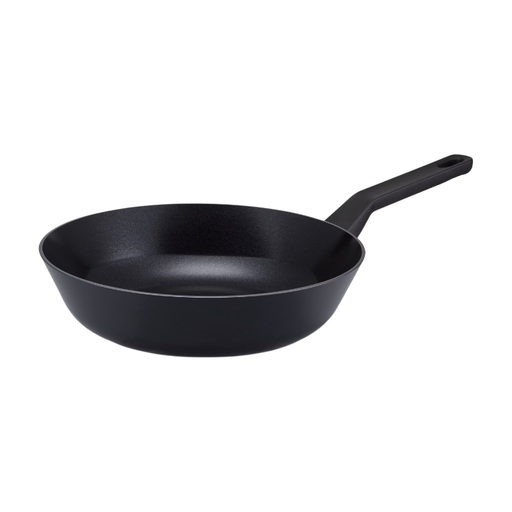
Brabantia Onyx Wok Pan, 28 cm
Why it suits this profile: According to the product description, this aluminium wok has a ceramic coating and is suitable for induction, gas, electric, ceramic and halogen hobs. This makes it practical for a household with a standard Dutch kitchen.
The stated compatibility means you will not later need a separate pan for induction or ceramic cooking. The coating does, however, require careful use of utensils.
28 cm, aluminium construction, ceramic non-stick coating and dishwasher-safe design according to the product information.
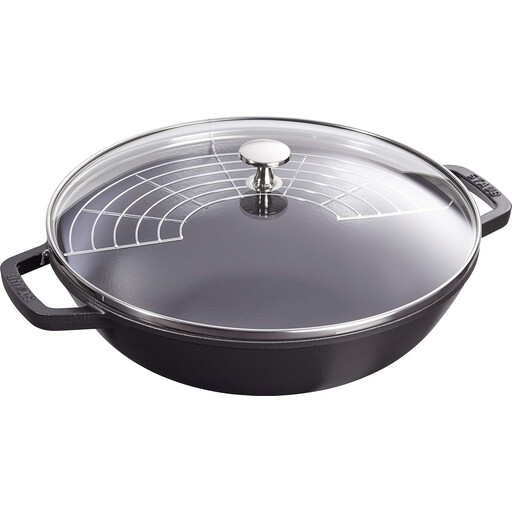
Staub Cast Iron Wok, 30 cm, Graphite/Grey
Why it suits this profile: If you are looking for a heavy pan for regular stir-frying, stewing, steaming and deep-frying, this model offers enameled cast iron, a capacity of 4.4 litres and a glass lid, according to the product details.
The product specifications explicitly state a weight of approximately 5.1 kg. This makes it clear in advance that heat retention may come at the expense of easy tossing.
Suitable for all the listed hobs, including induction; enameled cast iron; glass lid and included accessories.

School of Wok 12"/30 cm Uncoated Carbon Steel Wok
Why it suits this profile: This carbon steel wok is designed for users who want to combine high temperatures and a traditional Chinese wok style with a relatively lightweight model.
The product information clearly states that seasoning, hand washing and immediate drying are required. You therefore know in advance that this wok needs more care than a non-stick wok.
Carbon steel, bamboo handle, suitable for approximately two to three people and designed for rapid temperature changes.
Looking for more options?
We have put together a complete, up-to-date list of products that fully meet these strict selection criteria and the applicable European safety regulations.
Care without unnecessary wear
The right routine extends the usable life of any wok:
- Allow a hot pan to cool before adding water. A sudden change in temperature can warp enamel, the coating or the metal.
- Wash a carbon steel wok by hand, dry it immediately and apply a thin layer of oil if necessary.
- When using a ceramic wok or another non-stick wok, do not use sharp metal utensils unless the manufacturer expressly permits this.
- Check whether the pan is dishwasher-safe. “Hand wash recommended” usually means that cleaning it by hand better protects the finish and handle.
- Only store a wok with its lid when completely dry, and avoid putting pressure on glass components.
Frequently asked questions about woks
Which wok works on induction?
Choose a model with a magnetic flat base and check the stated hob compatibility. Many enameled cast iron woks and models with a multi-layer stainless steel base are suitable for induction. A traditional round Chinese wok may require a wok ring and is not automatically suitable for a flat induction zone.
Is a cast iron wok more practical than a carbon steel wok?
That depends on your cooking style. Cast iron retains heat for a long time and is suitable for slow cooking, but it is heavy. Carbon steel heats up faster and is lighter, but requires seasoning and careful drying to prevent rust.
Do I need a wok with a lid?
A lid is practical for stewing, simmering and steaming. It is not essential for quick stir-frying alone. When buying, consider the height of the lid and the available storage space.