
Choosing a Resistance Band Set in 2026: Practical Buying Tips for Home and Travel
A resistance band set may seem straightforward: choose a few elastic bands, attach them to a handle if needed, and start training. In practice, sets vary considerably in material, dimensions, resistance and versatility. The wrong choice can result in bands that shift during an exercise, lose their elasticity too quickly or fail to match your training goals.
Whether you are looking for fitness resistance bands for home, Pilates bands, resistance bands for strength training or a pull-up bar with resistance bands, pay particular attention to the following common pitfalls.
Common Pitfalls When Choosing Resistance Bands
1. Looking only at the colour
Colours are not standardised. A red band from one brand may offer a different level of resistance than a red band from another. Always check whether the product page describes resistance levels as light, medium and heavy, or provides a specific resistance rating.
A set with multiple resistance levels is generally more practical than a single very heavy band. This allows you to adjust the intensity to suit the exercise and increase the challenge gradually.
2. Buying a long band for exercises that require a loop
Long latex resistance bands with handles are suitable for movements such as arm curls, triceps extensions and front raises. Short loop bands are more convenient for exercises targeting the hips and legs, warm-ups, Pilates and certain physiotherapy exercises.
A long band is therefore not automatically more versatile. Consider the format:
- Loop bands: closed loops, often 5 cm wide and suitable for the legs, hips and Pilates.
- Tube bands: individual cables, usually supplied with handles and clips.
- Pull-up assist bands: long, sturdy loops designed to provide assistance during pull-ups or resistance exercises.
- Elastic fitness bands with anchors: designed to be secured to a door or another anchor point.
3. Ignoring the material and storage requirements
Latex provides excellent elasticity, but direct sunlight, heat and sharp edges can accelerate wear. Check the bands for cracks, fraying and thin spots before every use. Stop using them immediately if you notice any damage.
Anyone with a latex allergy should check the material specifications carefully. In that case, only choose an alternative when the product information clearly states that it is made from latex-free material.
Key Specifications Explained
Material: latex and comfort
Natural latex is used in many fitness resistance bands. Product information may describe it as flexible, odourless or soft to the touch. These are product characteristics, not guarantees of a particular training outcome.
Also check:
- the width and circumference of a loop band;
- the length of a tube;
- whether handles, clips or foot loops are included;
- cleaning and storage instructions;
- warnings about overstretching and damage.
Resistance levels
A set with light, medium and heavy bands makes it easy to switch resistance between exercises. Light resistance may be sufficient for smaller muscle groups or mobility work. Medium or heavy resistance may be more appropriate for larger muscle groups or exercises using multiple bands.
The resistance you feel also changes as the band stretches. The further you stretch it, the greater the tension becomes. Do not use a resistance level that you cannot control throughout the entire movement.
Dimensions and anchoring
A 5 cm-wide loop band with a 50 cm circumference serves a different purpose from a 120 cm tube. Check that the dimensions suit your height, the exercise and the space available.
Do not attach bands to a door, table or pull-up bar unless the manufacturer specifically describes that use. With a pull-up bar, you should also check whether the door frame, floor and installation method are suitable. A stated load capacity is a product specification, not a substitute for safe installation.
Which Resistance Band Set Is Right for Your Situation?
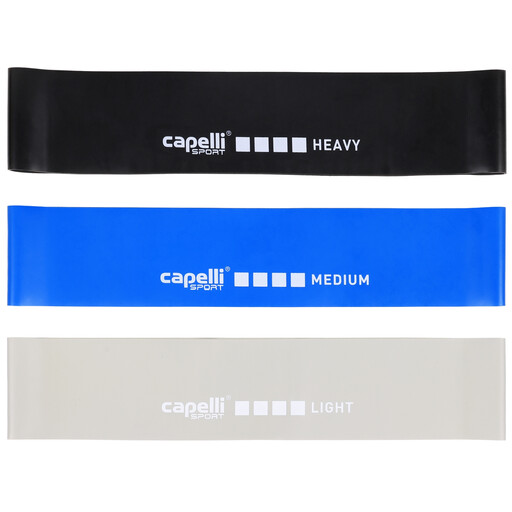
Capelli Sport 3PK Loop Resistance Bands
Why it fits: Three closed-loop bands for use at home, in the office, outdoors or while travelling. The set is easy to understand for beginners who want to try different resistance levels.
The set specifies light, medium and heavy resistance and uses one format: 5 cm wide with a 50 cm circumference. This tells you exactly which type of loop band you are buying.
Natural latex, three resistance levels and a storage bag. According to the product information, the bands are odourless and soft to the touch.
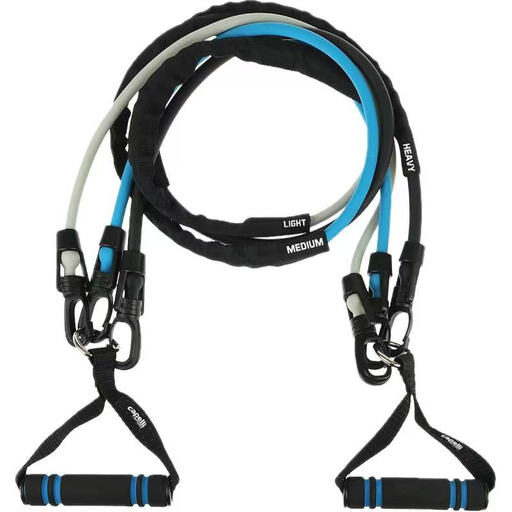
Capelli Sport 3-in-1 Resistance Band
Why it fits: Suitable for users who train with handles and want to adjust the resistance for each exercise, for example during arm curls or triceps kickbacks.
The product information lists three separate resistance cords and clips. You therefore do not need to buy an entirely new set when you want to change the intensity.
Each band is 120 cm long and comes with foam handles and clips for adding or removing bands. According to the specification, the materials are natural latex, foam and plastic.
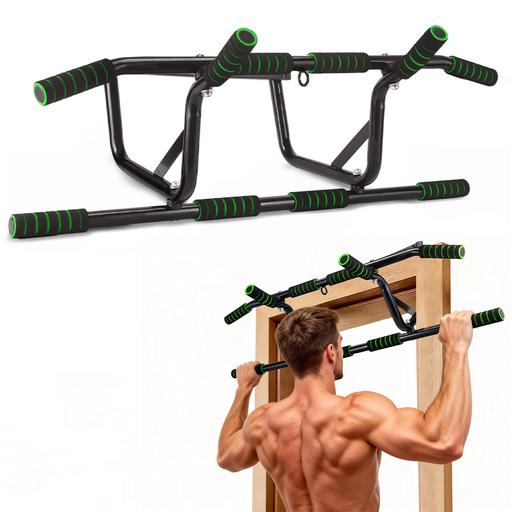
Worldgeil multifunctional over-door pull-up bar with resistance bands
Why it fits: For anyone who wants to combine band training with pull-ups and bar exercises without drilling into the wall.
The construction is designed to be installed over a door. Always check that the door frame is compatible before use and follow the installation instructions.
The product name specifies a load capacity of 200 kg, ergonomic non-slip handles and included resistance bands. Use this figure only under the prescribed installation conditions.
Want to explore more options?
Browse a current selection of pull-up bands and related fitness accessories by resistance, design and intended use.
Maintenance and Safe Use
A resistance band requires no electricity or batteries, keeping ongoing costs limited to the initial purchase. Its lifespan depends primarily on the material, storage and frequency of use. Store latex bands:
- in a cool, dry place;
- away from direct sunlight;
- away from sharp edges;
- preferably in the supplied bag;
- without leaving them stretched tightly for extended periods.
Clean the band with a slightly damp cloth. For tube bands with clips, also check the connections and handles. Allow everything to dry completely before storing it.
Do not stretch bands beyond their natural elasticity range. Do not allow them to snap back against the skin, and supervise children while they are in use. If you have pain or are undergoing rehabilitation, consult a qualified healthcare professional for suitable exercises; a resistance band is not a substitute for personalised medical advice.
Frequently Asked Questions About Resistance Band Sets
Which resistance bands are suitable for beginners?
A set with light, medium and heavy bands gives beginners room to start gradually and switch resistance between exercises. Begin with a resistance level that allows you to perform the movement with control. The heaviest band is not automatically suitable for every exercise.
How long do latex resistance bands last?
This varies depending on the material, frequency of use and storage conditions. Cracks, discolouration, stickiness or thin spots are signs that the band should be replaced. Direct sunlight, heat, sharp objects and overstretching can accelerate wear.
Are resistance bands suitable for strength training at home?
Yes. They can be used for exercises targeting the arms, shoulders, chest, back, legs and hips. Tube bands with handles are practical for strength-focused movements, while loop bands are often better suited to leg, hip, Pilates and mobility exercises. Choose the format based on your training goal, available space and desired resistance.