
Rapoo VT3 Gaming Mouse: A 2026 Guide
When choosing a new competitive-grade gaming mouse, every detail counts. The wrong purchase can mean the difference between victory and defeat, especially in fast-paced games where reaction time is crucial. You're looking for specific parameters: weight, response time, switch type, and battery life. The Rapoo VT3 series is designed with these demands in mind. This article provides a factual overview of the specifications to help you determine which model fits your playstyle.
What to Look for in a High-Performance Gaming Mouse
Before we dive into the models, it's helpful to understand the key specifications. These factors define the performance of an esports mouse.
- Weight and Ergonomics: A lightweight gaming mouse reduces wrist strain and enables faster, smoother movements. A weight around 50-60 grams is often considered ideal for FPS and MOBA players.
- Polling Rate: This indicates how often the mouse reports its position to the computer, measured in Hertz (Hz). A standard gaming mouse has a 1000Hz polling rate. An 8K wireless gaming mouse (8000Hz) reports 8 times more frequently, resulting in lower latency and a noticeably smoother cursor movement.
- Switch Type: Mechanical vs. Optical:
- Mechanical switches use a physical contact to register a click. They offer crisp, tactile feedback that many gamers prefer.
- Optical switch mouse models use an infrared light beam. When you click, the beam is interrupted, which registers the click. This eliminates the risk of unintentional double-clicks and has no 'debounce delay', further reducing response time.
- Battery Life: For a wireless mouse, a gaming mouse with long battery life is essential to avoid running out of power mid-game. The technology in the MCU (Microcontroller Unit) plays a major role here.
- Sensor and DPI: DPI (Dots Per Inch) measures the mouse's sensitivity. A high DPI isn't always better, but the ability to set it precisely, including independent X/Y axes, allows for precision tuning for your screen and playstyle.
- Programmability: The ability to remap buttons and set macros via software provides an advantage in complex games. A programmable gaming mouse with onboard memory remembers your settings across different devices.
Our 2026 Selection
Below is an overview of the Rapoo VT3 and VT3 MAX, based on their technical specifications.
RAPOO VT3 Wireless Gaming Mouse (White)
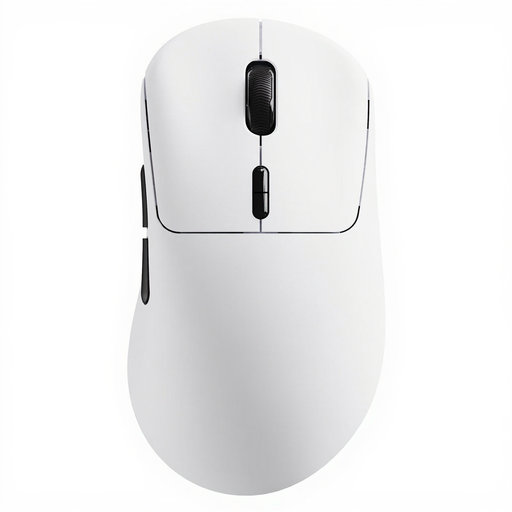
Why This Product The Rapoo VT3 is an ultra-lightweight wireless mouse aimed at gamers who prefer the traditional, tactile feedback of mechanical switches. Weighing just 53 grams and featuring a native 8K wireless polling rate, this model delivers the speed required for competitive gaming. The Nordic nRF54L15 MCU ensures efficient power consumption, resulting in exceptional battery life.
Advantages
- Weight: 53-gram ultra-lightweight design for minimal wrist strain.
- Battery Life: Up to 750 hours at 1000Hz, thanks to the energy-efficient Nordic nRF54L15 MCU.
- Polling Rate: Native 8000Hz wireless polling rate for minimal input lag.
- Switches: Mechanical switches with a 100-million-click lifespan for crisp, tactile feedback.
- Programmability: 10 programmable buttons and macro support via the A HUB software (Windows & Mac OS).
- Sensor: 26,000 DPI with independent X/Y axis settings.
Who It's For This model is ideal for competitive gamers seeking an extremely lightweight, responsive wireless mouse who appreciate the distinct 'click' and feedback of a mechanical switch.
RAPOO VT3 MAX Wireless Gaming Mouse (Black)
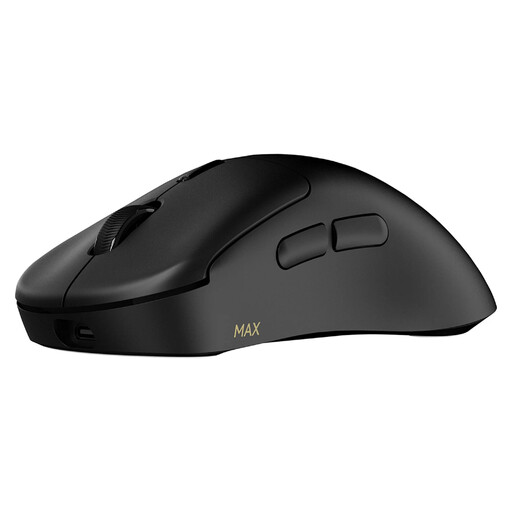
Why This Product The Rapoo VT3 MAX shares many core specifications with the standard VT3, such as the 53-gram weight and 750-hour battery life. The key distinction is its implementation of optical switches. These switches register clicks via infrared light, eliminating the risk of double-clicks and enabling even faster actuation due to the absence of debounce delay. This, combined with a higher maximum DPI, positions the VT3 MAX as a model for players who prioritize absolute speed and durability.
Advantages
- Switches: Optical switches with a 120-million-click lifespan, preventing double-clicks and featuring zero debounce delay.
- Weight: 53-gram ultra-lightweight design, identical to the standard VT3.
- Battery Life: Up to 750 hours at 1000Hz (requires a driver update for low-power mode).
- Polling Rate: Native 8000Hz wireless polling rate.
- Sensor: 30,000 DPI with 99.9% resolution accuracy and independent X/Y axis settings.
- Programmability: 10 programmable buttons and macro support with onboard memory.
Who It's For The VT3 MAX is aimed at the most demanding esports athletes and competitive gamers seeking every millisecond of advantage. The optical switches offer maximum responsiveness and reliability, which is crucial at the highest level of play.
Looking for More Control?
If you appreciate the 10 programmable buttons on the VT3 series but need even more control and customization for your commands, a macro keyboard can be a valuable addition to your setup. This allows you to assign complex actions and shortcuts to dedicated keys, boosting your efficiency in both games and productivity tasks.
Frequently Asked Questions
What is the main difference between the Rapoo VT3 and the VT3 MAX? The primary difference lies in the switches. The Rapoo VT3 uses mechanical switches (100-million-click lifespan) that provide distinct tactile feedback. The Rapoo VT3 MAX uses optical switches (120-million-click lifespan) that respond faster because they have no debounce delay and eliminate the risk of double-clicks. Additionally, the VT3 MAX has a slightly higher maximum DPI (30K vs 26K).
What does an 8K wireless polling rate mean in practice? An 8K (8000Hz) polling rate means the mouse reports its position to the computer 8,000 times per second. In practice, this translates to an extremely low latency (input lag) of 0.125ms, compared to 1ms for a standard 1000Hz mouse. This results in visibly smoother cursor movement and a more direct response to your actions, which can be an advantage in fast-paced games.
Is a 53-gram lightweight gaming mouse suitable for everyone? A lightweight gaming mouse is particularly advantageous for gamers who play with low sensitivity (DPI) and make large, sweeping arm movements, as is common in many FPS games. The lower weight reduces fatigue during long sessions and makes quick 'flicks' and target tracking easier. Gamers who prefer a heavier mouse for more stability might find a 53-gram mouse too light. The choice depends on personal preference and playstyle.