
Choosing the Right Outdoor Motion Sensor Light: A Practical Guide
An outdoor motion sensor light is a smart addition to any home. It offers convenience when you arrive after dark, deters unwanted visitors, and can add ambiance to your garden or patio. However, the market is flooded with options, and the wrong choice can quickly lead to frustration. Imagine a light that starts malfunctioning after a few heavy downpours, or a sensor that triggers for every passing cat.
As a Product Recommendation Officer at Joybuy, I see the challenges consumers face every day. To help you avoid a bad purchase, we'll discuss the most common pitfalls and the specifications that truly matter.
The 3 Pitfalls of Buying Outdoor Sensor Lighting
Before you make a purchase, it's wise to be aware of a few common issues that can seriously spoil your experience.
- The "weatherproof" light that can't handle local weather: Many lights are advertised as weatherproof, but the fine print (the IP rating) tells a different story. A light that is only ‘splash-proof’ often won't survive long in an unsheltered spot on your home's exterior.
- The solar-powered light that gives up in winter: An outdoor solar light with a sensor sounds ideal: no cables, no energy costs. But during the dark winter months, an inefficient solar panel or a weak battery often fails to charge the light sufficiently.
- The sensor with a mind of its own: Nothing is more annoying than a security light that constantly flashes on and off due to branches swaying in the wind or traffic on the street. A sensor without adjustable settings is often more of an annoyance than a convenience.
What to Look For: The Specifications That Really Matter
To sidestep these pitfalls, it's important to understand a few technical specifications. This will help you separate marketing jargon from actual facts.
Power Source: Mains, Solar, or Battery?
The choice of power source determines reliability and ease of installation.
- Mains Power (230V): This is the most reliable option. The light always works, regardless of the weather. The downside is that installation often requires a professional, and you're limited to a location with a power connection. Ideal for wall lighting at the front or back door.
- Outdoor solar light with sensor: This option offers maximum flexibility. You can place the light anywhere that receives sufficient daylight, without running any cables. However, pay close attention to the battery capacity and the solar panel's efficiency, especially for winter use.
- Wireless outdoor light with sensor (battery/rechargeable): Similar to solar in terms of flexibility, but dependent on batteries that you must periodically recharge or replace. Useful for spots with little sunlight, such as under a canopy or on a north-facing balcony.
IP Rating: How Waterproof Is Your Light, Really?
The IP rating (Ingress Protection) indicates how well a light is protected against dust and moisture. This is a crucial factor for its lifespan.
- IP44: Splash-proof. This is sufficient for a light in a sheltered location, such as under an eave, carport, or in a porch. It is protected against rain that doesn't hit the light directly.
- IP65: Dust-tight and jet-proof. These lights can withstand water jets from any angle. This is a more robust choice for unsheltered spots fully exposed to rain and wind.
Brightness (Lumen) and Colour Temperature (Kelvin)
These two values determine the function and atmosphere of your lighting.
- Lumen (lm): Indicates the amount of light. For atmospheric garden lighting along a path, 200-500 lumens is often enough. For an outdoor security light by the driveway or back door, a higher value from 500 to as much as 4000 lumens is desirable.
- Kelvin (K): Determines the colour of the light. A lower value like 2700K produces warm white light, which is cosy and atmospheric. A higher value like 5000K provides cool, bright daylight, which is better for visibility and deterrence.
Our Product Recommendations
Based on these criteria, we have selected a few popular choices that suit different needs and situations.
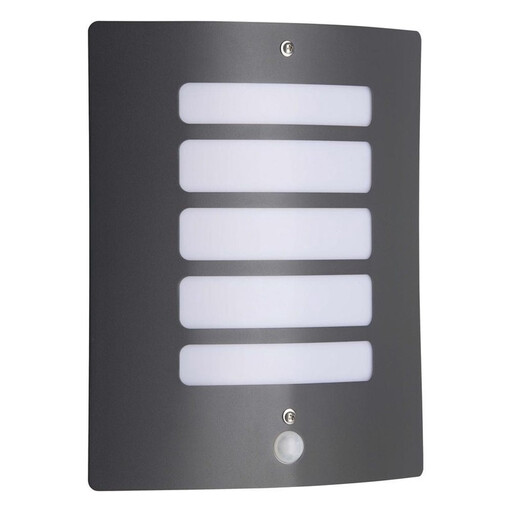
Brilliant Outdoor Light Motion Detector Wall Garden Lamp
Why This Fits Their Persona: Seeks a reliable, no-nonsense outdoor wall light with a sensor for the front or back door. This light connects to the mains, so it always works, regardless of the weather. No hassle with dead batteries or diminished performance in winter.
Because this light runs on mains power, you bypass the pitfall of a solar light that doesn't charge sufficiently during the dark winter months. Its reliability is guaranteed.
Runs on 230V mains power for consistent performance. The E27 fitting gives you the freedom to choose your own LED bulb with the desired brightness and colour.
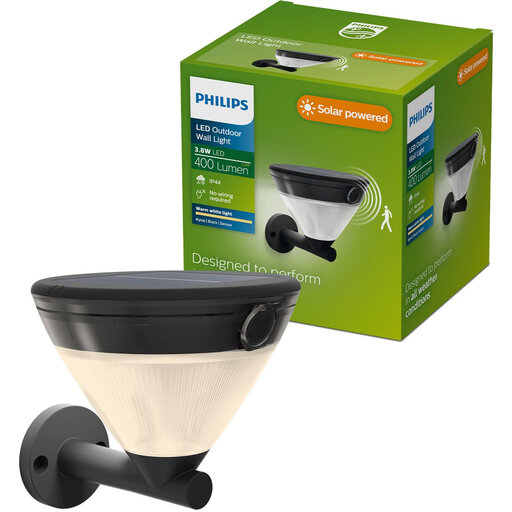
Philips Kyna Solar Wall Lamp
Why This Fits Their Persona: Ideal for those who want a sustainable and easy-to-install solution without running cables. Perfect for a shed, balcony, or as garden lighting with a motion detector where there's no power outlet.
This light doesn't have complex sensor settings. The built-in dusk-to-dawn and motion sensor works automatically, avoiding the pitfall of an overly sensitive or poorly adjusted sensor. It just works when needed.
Runs entirely on solar power, meaning no energy costs and simple installation. The warm white light (2700K) creates a pleasant atmosphere instead of cold, functional light.
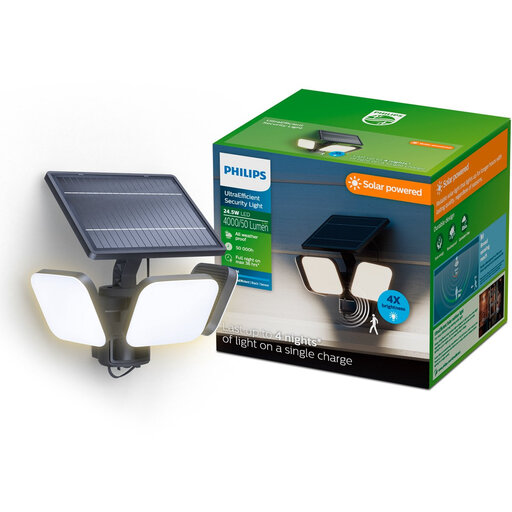
Philips UltraEfficient Zyren Wall Light
Why This Fits Their Persona: For those seeking maximum visibility and deterrence. This powerful floodlight effortlessly illuminates a large driveway, backyard, or dark corner, providing a sense of security.
With an IP65 rating, this light is fully dust-tight and jet-proof, unlike many IP44 models. It's built to withstand the harshest weather conditions without issue.
Very high light output of 4000 lumens for maximum visibility. The advanced sensor has a wide detection range, and the IP65 rating guarantees durability.
Looking for more options?
We have compiled a complete, up-to-date list of products that meet these selection criteria and current safety standards.
Frequently Asked Questions
Do solar-powered outdoor lights work well in the winter?
Yes, modern solar garden lights are designed to function even with limited daylight. They charge using daylight, not just direct sunlight. However, performance on very dark, short days may be less than in the summer. If you want reliable year-round lighting, choose a model with an efficient solar panel and a battery with sufficient capacity.
What IP rating do I need for my outdoor light?
That depends on the location. For a sheltered spot, such as under an eave or in a porch, IP44 (splash-proof) is usually sufficient. For an unsheltered wall that is fully exposed to rain and wind, an IP65 rating (jet-proof) is a safer and more durable choice.
How can I prevent my sensor light from reacting to every cat?
Choose a model that allows you to adjust the sensitivity (SEN) and duration (TIME). Many lights have small dials for this purpose. By slightly lowering the sensitivity, you can prevent small animals or moving branches from activating the sensor. The positioning of the light is also important: do not aim the sensor directly at a public road or your neighbour's garden.