
Buying an OBD2 Scanner: A Practical Guide to Making the Right Choice
A warning light on your dashboard. It's a familiar scenario that immediately raises questions. Is it serious? Do I need to go to the workshop right away? The bill for a simple diagnostic check can quickly add up. An OBD2 scanner puts you back in control. It allows you to read your car's computer yourself, identify problems, and in many cases, even fix them.
As a Joybuy Product Recommendation Officer, I'm here to help you make the right choice. In this article, I'll cut through the marketing jargon and provide you with practical information. Whether you're a serious DIY enthusiast looking to save money or a professional seeking an efficient workshop tool, this guide will get you started.
What to Look for When Buying
The market for diagnostic equipment is vast. To avoid buying a device that doesn't meet your expectations, here are a few key considerations.
1. Vehicle Compatibility (CAN FD & DoIP)
Not every scanner works on every car, especially when it comes to advanced features. Modern cars use newer communication protocols. For example, a CAN FD scanner is required for many vehicles produced after 2020, particularly from brands like General Motors. For recent models from BMW, Jaguar, and Land Rover, support for the DoIP protocol is essential for fast and reliable diagnostics. Therefore, always check if the device supports the protocols of your current (and future) car.
2. The Features You Need
Consider what you want to do with the device. Is simply reading and clearing car fault codes enough? Then a basic fault code reader will suffice. However, if you also want to perform maintenance tasks yourself, you'll need more. Think of a service reset tool for resetting the oil interval, DPF regeneration for diesel cars, or ABS bleeding after replacing brake components. The most advanced devices even offer bi-directional control (allowing you to actuate components) and ECU coding.
3. Software Updates and Future Costs
Technology doesn't stand still, and neither do cars. A good diagnostic tool is regularly updated with new features and support for new car models. Some brands charge an annual subscription fee for these updates. Others, like XTOOL, offer models with lifetime updates. This can save you significant costs in the long run and ensures your tool remains relevant.
Our Recommended OBD2 Diagnostic Tools
Based on specifications and functionality, we have listed some popular choices for you.
XTOOL A30D OBD2 Diagnostic Device BT
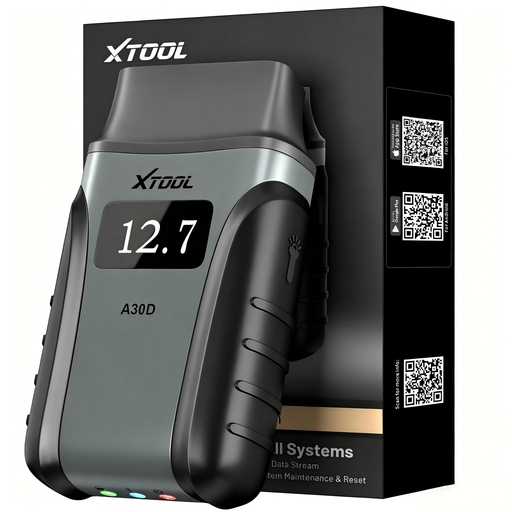
Why It Stands Out The XTOOL A30D is a compact, wireless adapter that connects to your Android or iOS device via Bluetooth. What sets this model apart in its price range is the combination of lifetime updates for over 19 service functions and support for bi-directional control. This means you can not only read data but also perform active tests. The addition of CAN FD support makes it a future-proof choice.
Pros
- Wireless Bluetooth connection for use with a smartphone or tablet.
- Lifetime free updates for software and 19+ service functions.
- Supports bi-directional control (active tests) for in-depth diagnostics.
- Compatible with the modern CAN FD protocol.
Who Is It For? For the serious DIY enthusiast who wants to go beyond just reading fault codes and is looking for a flexible, wireless solution without subscription fees.
XTOOL D8W OBD2 Scanner Diagnostic Tool Wireless
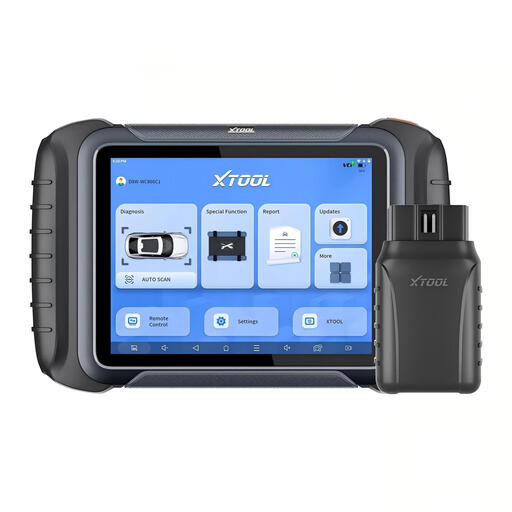
Why It Stands Out The D8W is a professional diagnostic tool that runs on an Android tablet with a stable Wi-Fi connection. Its intuitive topology map displays the communication structure between all vehicle modules in a single overview. With advanced capabilities like ECU coding, PMI (copying module data), and over 42 service functions, this is a powerful piece of equipment. Support for both CAN FD and DoIP ensures broad compatibility with the latest vehicles.
Pros
- Fast and stable wireless Wi-Fi connection.
- Advanced features like ECU coding and a visual topology map.
- Very comprehensive with 42+ service functions and VAG guided functions.
- Supports both CAN FD and DoIP protocols.
- Includes 3 years of free software updates.
Who Is It For? For the professional auto mechanic, workshop owner, or the very demanding hobbyist looking for an all-in-one solution for complex diagnostics and repairs on a wide range of car brands.
XTOOL D6S OBD2 Scanner Diagnostic Tool
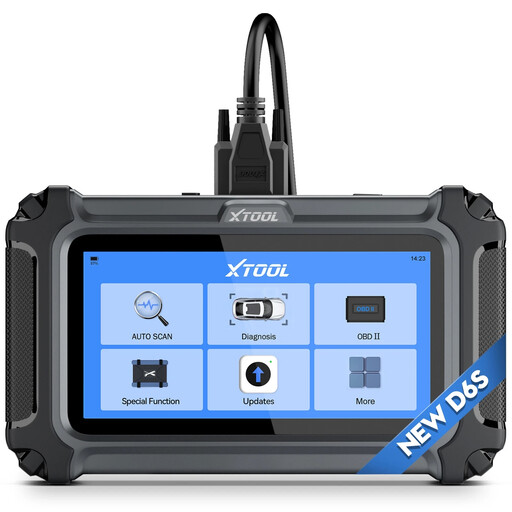
Why It Stands Out The XTOOL D6S offers an excellent balance between functionality and cost. It's a wired, tablet-style diagnostic tool, but its biggest advantage is that all software, including the 30+ reset functions, comes with lifetime updates. This means no hidden costs in the future. The device supports full system diagnostics, CAN FD, and FCA AutoAuth for secure access to newer Fiat, Chrysler, and Jeep models.
Pros
- All software and 30+ reset functions have lifetime updates.
- Full system diagnostics for over 85 car brands.
- Compact and robust tablet design with a stable, wired connection.
- Supports FCA AutoAuth and the CAN FD protocol.
Who Is It For? For the DIYer or small workshop looking for a reliable and, above all, future-proof workshop tool without having to worry about recurring subscription fees.
Didn't Find What You're Looking For?
The world of diagnostic tools is vast, and the right choice is a personal one. If these recommendations don't perfectly match your needs or budget, there's plenty more to explore.
Explore more OBD scanners for car diagnostics here
Frequently Asked Questions about OBD2 Scanners
1. What can you do with an OBD2 scanner? It depends on the model. A basic device can read and clear engine fault codes (DTCs) and display live sensor data. More advanced models offer access to all of the car's systems (ABS, airbag, transmission, etc.) and can perform specific maintenance tasks, such as an oil service reset, DPF regeneration, ABS bleeding, injector coding, and even perform bi-directional control to test components.
2. Does an OBD2 scanner work on every car? The OBD2 standard is mandatory for most petrol cars built in the EU after 2001 and for diesel cars after 2004. This guarantees that you can read engine codes. However, for access to other systems (like ABS or airbags) and for advanced functions, compatibility is brand- and model-dependent. Therefore, always check the scanner's specifications.
3. What is the difference between a simple fault code reader and a professional diagnostic tool? A simple fault code reader is primarily designed to read and clear generic and manufacturer-specific fault codes from the engine management system. A professional diagnostic tool can communicate with virtually all electronic modules in a car. It provides in-depth diagnostics, live data for all systems, and the ability to perform service and maintenance functions, test components, and sometimes even code modules (ECU coding).