
Buying a Food Slicer in 2026: A Practical Guide
A food slicer can elevate your kitchen from preparing standard meals to creating fresh, artisanal experiences. Imagine perfectly uniform slices of bread, wafer-thin carpaccio, or cheese for a charcuterie board. However, purchasing a slicer is a decision that requires careful consideration. The wrong choice often results in a cumbersome appliance gathering dust in a cupboard. This guide will help you make an informed decision based on key specifications, ensuring you find a model that perfectly suits your needs and your kitchen.
What to Look For When Buying a Food Slicer
Before you start comparing models, it's essential to understand the key features. These parameters determine the machine's performance, durability, and ease of use.
Blade Type: Serrated, Smooth, or Both?
The blade is the heart of any food slicer. Your choice will depend on what you primarily intend to slice.
- Serrated blade: Ideal for foods with a hard crust and a soft interior, like bread. The serrations 'bite' through the crust without crushing the inside.
- Smooth blade: Essential for cutting wafer-thin, precise slices of items like cured meats (charcuterie) and cheese. A smooth blade delivers a clean, neat cut without tearing.
- Combination: Some models come with both blades or offer the option to purchase a second blade separately.
Motor Power and Drive System
The power, expressed in Watts (W), gives an indication of the motor's strength. However, the drive system is even more important. A machine with a gear drive is generally more powerful and durable than a model with a belt drive, especially for heavy use or when slicing tougher foods.
Material and Stability: Metal vs. Plastic
- Metal housing: Offers superior stability and durability. These machines are heavier, which prevents them from shifting during operation. They are often the preferred choice for those who use their slicer frequently and for more demanding tasks.
- Plastic housing: Makes the appliance lighter and often more compact. A foldable slicer is almost always made of plastic, which is ideal for kitchens with limited storage space.
Slicing Thickness and Adjustability
The adjustable slicing thickness is a crucial factor. A range of 0 to 15 mm is standard for most tasks. For those who want to slice wafer-thin carpaccio or extra-thick slices of bread, a wider range (e.g., up to 20-23 mm) may be desirable. A stepless or infinitely variable adjustment offers the highest precision.
Safety and Ease of Use
Look for features like a food holder (to protect your fingers), a child-safe switch, and the overall stability of the appliance. Ease of cleaning is also a key consideration; models with a removable blade and carriage are much easier to maintain.
Our Top Slicer Picks for 2026
Based on the criteria above, we have curated a selection of models that represent different needs and use cases.
Fritel Slicer SL 3655 - All-Purpose Slicer
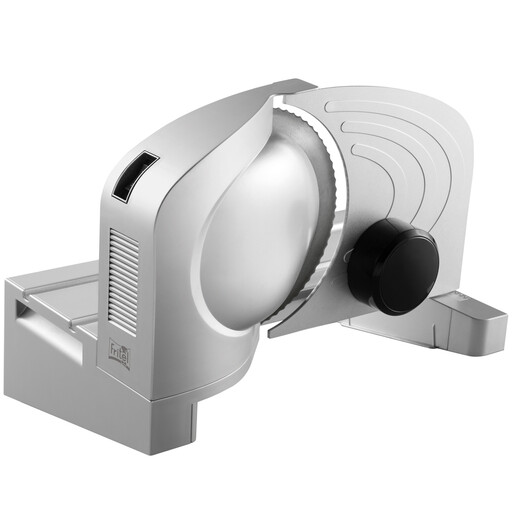
Why this product The Fritel SL 3655 is a robust all-rounder. The combination of a metal housing, a gear drive, and a 15° tilted carriage makes slicing both efficient and stable. The tilted position allows gravity to guide the food towards the blade, requiring less effort from the user.
Advantages
- Stable Construction: Full metal housing and stop plate for enhanced stability.
- Powerful Performance: Gear-driven motor designed for heavy use.
- Ergonomic Design: The 15° tilted carriage improves slicing results and user comfort.
- Generous Slicing Range: Infinitely adjustable from 0 to 20 mm.
- Serrated Stainless Steel Blade: 17 cm diameter, suitable for bread, cheese, and hard cured meats.
Who is this for? For the serious home chef and families who want to slice fresh food regularly. Its durable build and ease of use make it a reliable machine for daily tasks, from slicing bread to cold cuts.
View the Fritel Slicer SL 3655
FRITEL Slicer SL 3110 - Foldable Slicer
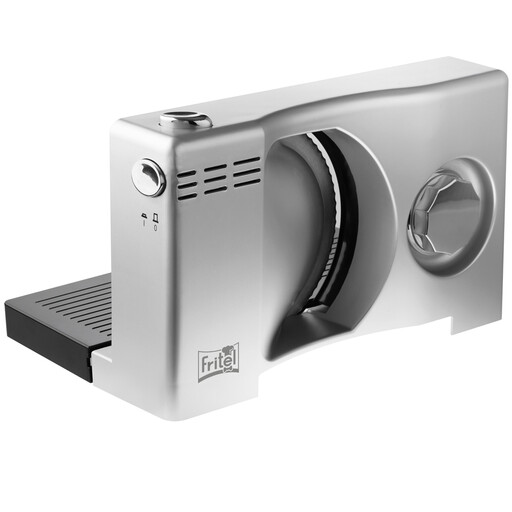
Why this product The FRITEL SL 3110 addresses a common problem: storage space. This model is fully foldable, allowing it to be stored compactly in a kitchen cupboard after use. Despite its compact design, it provides all the functionality needed for basic slicing tasks.
Advantages
- Compact and Foldable: Very easy to store, ideal for smaller kitchens.
- Safety: Equipped with a child-safe on/off switch.
- Easy to Maintain: The stainless steel serrated blade and carriage are removable for easy cleaning.
- Lightweight: The plastic housing makes the appliance easy to move.
Who is this for? For users looking for a functional home food slicer for occasional use, such as slicing a fresh loaf of bread on the weekend, and for whom ease of storage is a top priority.
View the FRITEL Slicer SL 3110
ritter serano⁷ Professional Electric Food Slicer
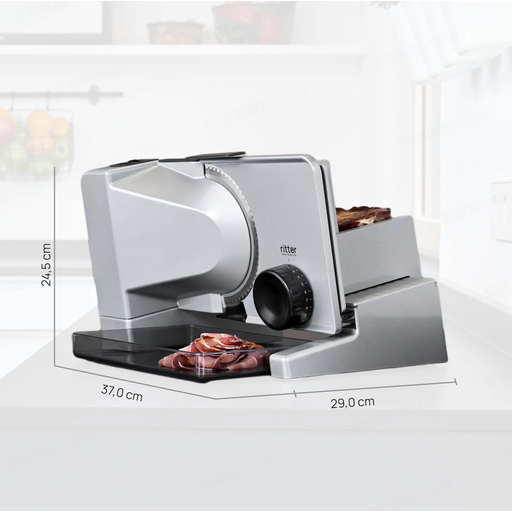
Why this product The ritter serano⁷ is a professional-grade slicer for the demanding home user. Its "Made in Germany" quality is backed by a full metal construction, a powerful DC motor, and unique features like electronic speed control. The machine comes with both a serrated blade and a smooth blade, making it an extremely versatile choice.
Advantages
- Complete Set: Includes a serrated blade for bread and a smooth blade for cured meats.
- Precision and Control: Variable electronic speed control for optimal results with any food.
- Robust Build: Full metal, tilted construction for maximum stability and performance.
- Extra-Wide Slicing Range: Adjustable up to 23 mm.
- Durability: Designed for a long service life, with repair services available.
Who is this for? For the 'prosumer' and culinary enthusiast who is willing to invest in precision and durability. Perfect for anyone who regularly slices wafer-thin charcuterie, carpaccio, or cheese and strives for professional-quality results at home.
Haven't Found the Perfect Match?
Every kitchen and every cook is different. If the models above don't fully meet your specific requirements, a wider range of options is available. Compare different models based on power, material, blade type, or specific features to find the food slicer that's a perfect fit for you.
Discover all food slicers in our collection
Frequently Asked Questions about Food Slicers
Can a bread slicer also slice meat?
Yes, but the result depends on the blade. A bread slicer typically has a serrated blade. This works well for hard sausages, but for slicing soft meats like ham or roast beef wafer-thin, a smooth blade is superior. A dedicated meat slicer is often equipped with a smooth blade as standard.
How do I safely clean an electric food slicer?
- Always unplug the slicer from the power outlet before you begin cleaning.
- Remove any detachable parts, such as the carriage and the food holder. These can often be washed by hand.
- If the blade is removable, detach it according to the manufacturer's instructions. Be extremely careful; the blade is very sharp. Clean it with a brush, warm water, and soap.
- Wipe down the machine's housing with a damp cloth. Never submerge the main body of the slicer in water.
Is a more expensive slicer always better?
Not necessarily. The price is often determined by the materials (metal is more expensive than plastic), motor power, drive system (gear vs. belt), and extra features. A more expensive, heavy-duty machine is a good investment for someone who will use it frequently and intensively. For occasional use, a simpler, more affordable model may be sufficient. The 'better' machine is the one that matches your usage frequency and specific needs.
Author: Joybuy Product Recommendation Officer
Positioning: An objective, practical shopping assistant focused on facts and product parameters, without marketing hype.