
Choosing the Right Electric Heater in 2026: A Practical Guide
An additional heat source in your home can significantly enhance comfort, especially during unexpectedly cold days. But purchasing an electric heater often raises questions. Which model is right for your space? What about energy consumption? And is the device safe enough for a household with children or pets? The wrong choice can result in a heater that's too noisy, unnecessarily inflates your energy bill, or fails to heat the room effectively.
This guide will help you make an informed decision. We'll cover the different types of supplementary electric heaters, the key specifications to look for, and present a selection of models with diverse features.
Buyer's Guide: What to Look For in an Electric Heater
Before making a choice, it's helpful to understand the key features and types. This will help you find a heater that perfectly meets your needs.
Types of Electric Heaters
- Convection Heater: This type heats the air in a room via natural air circulation (convection). Cold air is drawn in at the bottom, warmed by an element, and rises as warm air. A convection heater is often silent and provides even heat distribution, making it ideal for living rooms or bedrooms.
- Fan Heater: This heater blows air past a heating element and uses a fan to distribute the warm air quickly throughout the room. A ceramic heater is a popular type of fan heater that uses a ceramic element for efficient and safe heat output. They are compact and well-suited for fast, targeted heating.
- Fireplace Heater: This type combines the functionality of an electric heater with the aesthetic of a traditional fireplace. The flame effects can often be used without the heating function, making them a decorative addition to any room.
Key Specifications
- Power (Wattage): The power, expressed in Watts (W), determines how powerful the heater is. A higher wattage means faster, more intense heating, but also higher energy consumption. Many models have multiple settings (e.g., 1000W and 2000W) to adjust the power output.
- Thermostat: A heater with a thermostat is a smart choice. You set the desired temperature, and the heater automatically cycles on and off to maintain it. This prevents unnecessary power consumption and ensures a consistent comfort level.
- Safety: Essential safety features include overheat protection (automatically shuts off if the temperature gets too high) and tip-over protection (shuts off if the heater is knocked over). Also, check if the material is heat-resistant.
- Noise Level: For use in a bedroom or office, a quiet heater is desirable. Convection heaters are typically the quietest because they don't have a fan. For fan heaters, the noise level, measured in decibels (dB), is a key factor.
Our Top Picks for 2026
Below is a selection of electric heaters, chosen based on their specifications and functionalities.
Totopia 2000W Convection Heater
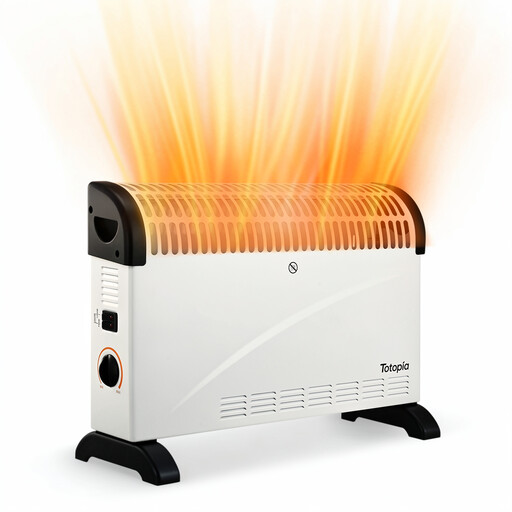
Why We Chose It This Totopia heater is a classic convection heater that focuses on quiet and even heating. With a maximum power of 2000W, it is suitable for heating medium-sized rooms like a living room or a larger office. The stable, wide base and overheat protection make it a reliable choice.
Advantages
- Quiet Operation: Works without a fan, resulting in virtually silent heat output.
- Adjustable Power: Three heat settings (750W, 1250W, 2000W) and an adjustable thermostat for precise temperature control.
- Stable Design: The wide base provides extra stability and reduces the risk of tipping over.
- Safety: Equipped with built-in overheat protection.
Who It's For Ideal for users seeking a quiet, consistent heat source for their bedroom, living room, or workspace, and who value a simple and stable design.
View the Totopia 2000W Convection Heater
Alpina Heater Helsinki ND-183
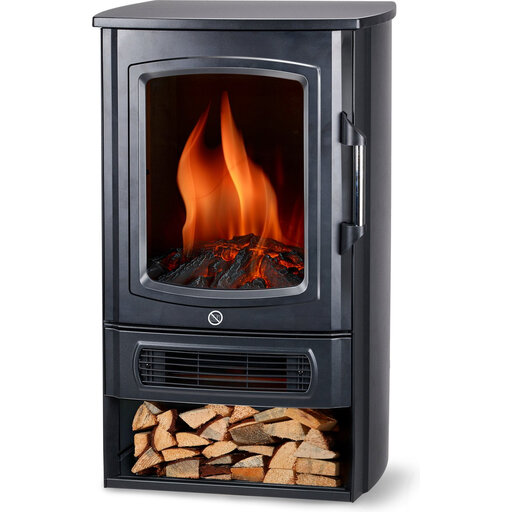
Why We Chose It The Alpina Helsinki combines heating with ambiance. This model functions as an electric heater with the look of a freestanding fireplace. The realistic flame effects can be used independently of the heat function. The turbo function ensures a rapid warm-up when needed.
Advantages
- Ambiance and Warmth: Provides both heat and a decorative flame effect.
- Two Heat Settings: Choose between 1000W and 2000W, plus a turbo function for extra-fast heating.
- Adjustable Thermostat: Keeps the room at a constant, comfortable temperature.
- Safety: Equipped with overheat protection.
Who It's For Perfect for those who want not only functional heat but also to add ambiance to their living room or other living space. Please note: according to the manufacturer, this model is not suitable for use in the bathroom.
View the Alpina Heater Helsinki
DREO Energy Saving Fan Heater Atom 416
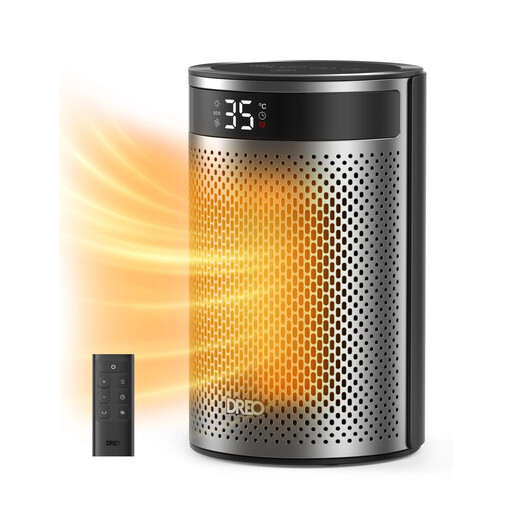
Why We Chose It This compact ceramic heater from DREO is designed for fast, quiet, and efficient heating. According to the manufacturer, its Hyperamics technology delivers heat within 2 seconds. With a noise level as low as 34dB, it's a remarkably quiet heater for a fan model. The comprehensive safety features make it a compelling option for households where safety is a top priority.
Advantages
- Rapid Heating: The PTC ceramic technology delivers heat very quickly, according to DREO.
- Quiet Operation: The noise level can be as low as 34dB, which is comparable to a whisper.
- Energy-Efficient Mode: A special ECO mode with a precise thermostat (adjustable from 5-35°C) helps regulate energy consumption.
- Advanced Safety: Features the Shield360˚ system, which includes tip-over and overheat protection, flame-retardant material, and a cool-touch exterior.
Who It's For A great choice for anyone looking for a compact, fast, and relatively quiet fan heater for an office, study, or bedroom. The extensive safety features and energy-saving mode make it a modern and thoughtful option.
View the DREO Energy Saving Fan Heater
Alternatives for Specific Spaces
The heaters mentioned above are designed for general use in dry spaces. Are you specifically looking for a solution for a damp environment? A bathroom places different demands on an electric heater, particularly regarding moisture resistance (expressed as an IP rating). Specially designed models are available for such applications.
Discover our selection of safe and suitable options for bathroom heaters.
Frequently Asked Questions (FAQ)
1. How much energy does an electric heater use? Consumption depends on its power (Wattage) and how long the heater is on. A 2000W (2 kW) heater uses 2 kilowatt-hours (kWh) per hour at full power. A model with a thermostat and an energy-efficient heater mode can help reduce consumption by only heating when necessary.
2. Which type of electric heater is the quietest? In general, a convection heater or an oil-filled radiator is the quietest, as they do not use a fan for heat distribution. However, modern ceramic fan heaters, like the DREO model, are also designed to be very quiet, with noise levels comparable to a quiet library.
3. Are electric heaters safe to use? Modern electric heaters are typically equipped with multiple safety features. When purchasing, look for overheat protection and tip-over protection. Always place the heater on a stable, flat surface, keep it away from flammable materials, and never cover the unit.
Written by: Joybuy Product Recommendation Officer