
Smart Bulb E27: Our Recommendations for 2026
Considering a smart E27 bulb? The sheer number of options can be overwhelming. Which brand is compatible with your system? Do you need a separate hub? And what happens if the Wi-Fi goes down? The wrong choice can lead to frustration and unused features. This guide provides a practical overview of the key selection criteria and presents a curated selection of products based on their specifications.
What to Look for When Buying Smart Lighting
Before making a choice, it's helpful to understand a few technical aspects. This will help you select a product that aligns with your needs and existing equipment.
1. Socket Type: The Basics
The term E27 refers to the socket, the screw base you use to fit the bulb into a fixture. This is the most common large screw-in socket type in many homes. Always check that your light fixture has an E27 socket.
2. Connectivity: How the Bulb Communicates
A smart lamp connects to your network to be controlled. There are three main technologies:
- Wi-Fi: A
wifi lampconnects directly to your Wi-Fi network, with no need for an additional device (a bridge or hub). This offers the simplest setup, ideal for anyone starting with just a few bulbs. - Bluetooth: Bulbs with Bluetooth can be controlled directly via a smartphone app as long as you are within range (usually in the same room). For out-of-home control or automation, a bridge is often still required.
- Zigbee/Matter: These protocols create a separate network for your smart devices. This requires a central hub (bridge), such as the Philips Hue Bridge. The advantage is a more stable and responsive network that doesn't strain your Wi-Fi, which is especially beneficial when using many bulbs. Matter is a newer standard designed to improve compatibility between different brands.
3. Light Options: Color and Ambience
Not every smart bulb is a colored lamp. The options are:
- Dimmable White: Offers a single color temperature (usually warm white, around 2700K), allowing you to adjust the brightness.
- Tunable White (Ambiance): Allows you to adjust the color temperature from warm white (for relaxation) to cool white (for concentration).
- Color (RGB/RGBW): Offers millions of colors in addition to white. RGBW bulbs have dedicated white LEDs, which often results in higher-quality white light compared to bulbs that create white by mixing RGB LEDs.
4. Control and Compatibility
Check how you want to control the bulb. Almost every lamp with app is available for iOS and Android. If you want to use voice control, check if the bulb is compatible with systems like Google Assistant, Amazon Alexa, or Apple Siri.
Our Top Picks for 2026
Below is a selection of products with an E27 socket. This selection is based on the features and specifications provided by the manufacturer.
1. Philips Wiz - 2 LED Smart Bulbs and Remote Control
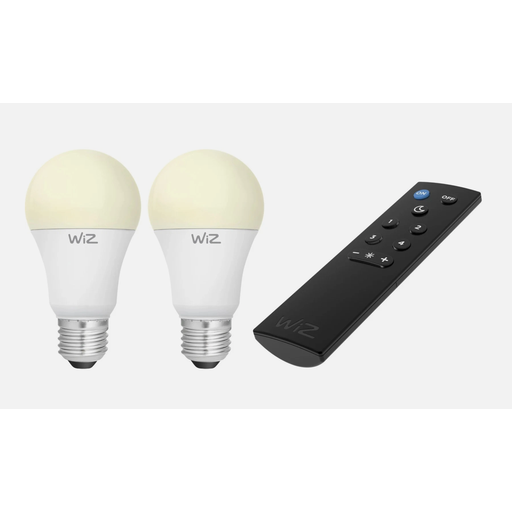
Why We Chose It This is a complete smart lighting starter kit that works right out of the box without any extra hardware. The bulbs connect via Wi-Fi, making setup straightforward. The included remote control is a practical benefit for family members or guests who prefer not to use the app.
-
Pros:
- No hub or bridge required; direct Wi-Fi connection.
- Includes a physical remote for direct control.
- Supports Matter, improving future compatibility with other smart devices.
- SpaceSense technology enables motion detection without separate sensors, according to the manufacturer's specifications.
-
Who is this for? Ideal for beginners looking for a simple, all-in-one solution to get started with
smart lighting. It's also well-suited for situations where not everyone wants to use a smartphone for control, such as in a living room or guest room.
Product Specifications:
- Socket: E27
- Light Source: 2x LED 9 W, 810 lm
- Light Color: Warm White (2,700 K)
- Connectivity: Wi-Fi
- Energy Class: F
View the Philips Wiz Starter Set
2. Aigostar Smart Dimmable LED Bulb G80 E27
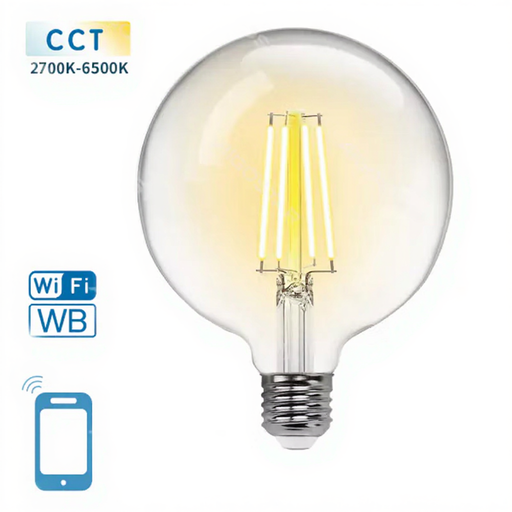
Why We Chose It This bulb from Aigostar combines smart functionality with a decorative design. Its G80 globe shape makes it an excellent choice for open fixtures where the bulb itself is visible. It offers a full color spectrum and tunable white light.
-
Pros:
- Full color spectrum (Multicolor) and tunable white tones (2700-6500K).
- Decorative G80 globe shape.
- Direct Wi-Fi connection, no hub required.
- Relatively energy-efficient with an energy class D rating.
-
Who is this for? For users looking for an affordable, standalone
colored lampwith added aesthetic value. Perfect for accent lighting, creating ambience, or in a fixture where the bulb's design is a key feature.
Product Specifications:
- Socket: E27
- Light Source: LED 6 W
- Light Color: Multicolor (RGB) + Tunable White
- Connectivity: Wi-Fi
- Energy Class: D
View the Aigostar Smart Dimmable LED Bulb
3. Philips Hue Essential A60 Smart Bulb, White and Colored Light, 3-Pack
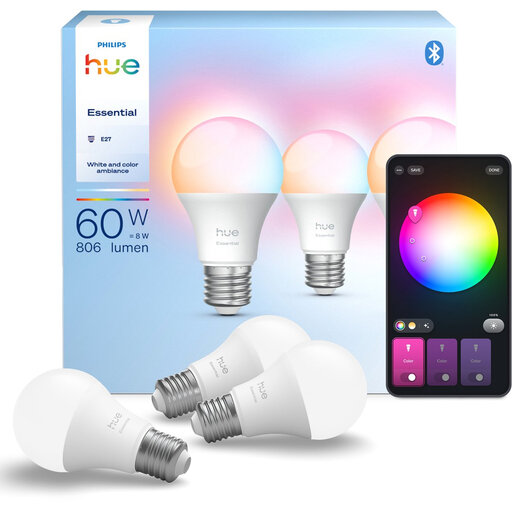
Why We Chose It The philips hue e27 bulbs are renowned for their reliability and extensive ecosystem. This 3-pack offers both colored and high-quality white light. The bulbs can be controlled directly via Bluetooth, but for full functionality (like out-of-home control and advanced automation), a Hue Bridge is recommended.
-
Pros:
- Part of the extensive and stable Philips Hue ecosystem.
- Choice of control via Bluetooth (up to 10 bulbs) or a Hue Bridge (up to 50 bulbs and more features).
- High-quality color rendering and a wide range of white tones (RGBW).
- Comprehensive app with numerous scenes and integration options.
-
Who is this for? For users planning to build an extensive smart home system or who already own other Hue products. It's an investment in a platform known for its quality, stability, and broad support from other brands.
Product Specifications:
- Socket: E27
- Light Source: 3x LED 8 W, 806 lm
- Light Color: RGBW (color and all shades of white)
- Connectivity: Bluetooth, Zigbee (via Hue Bridge)
- Dimmable: Yes
View the Philips Hue Essential 3-Pack
Didn't Find What You're Looking For?
A smart bulb offers great flexibility, but sometimes a simpler model is all you need. If you don't require color, app control, or automation, a standard dimmable E27 LED bulb or a non-dimmable version might be a better choice.
Explore our range of White Bulbs for more options.
Frequently Asked Questions
Do I need a special hub or bridge for a smart bulb?
That depends on the bulb. Bulbs that operate via Wi-Fi or Bluetooth typically don't need a hub for basic functionality. Bulbs that use protocols like Zigbee (such as most Philips Hue bulbs) require a bridge for full functionality, stability, and out-of-home control.
Do smart bulbs work with a regular light switch?
Yes, you can turn a smart bulb on and off with a standard wall switch. The bulb will turn on to its last used setting. However, be aware: if the physical switch is off, the bulb loses power and can no longer be reached by the app or a voice assistant. For optimal performance, always leave the wall switch on and control the light using the app, a smart button, or your voice.
What is the difference between an E27 socket and other socket types?
The E27 socket is a screw-in type with a 27 mm diameter, also known as the 'large screw' socket. It is the standard for many ceiling, floor, and table lamp fixtures. Another common size is the E14 socket ('small screw'), often used in smaller lamps and fixtures. Always check your fixture's socket type before buying a bulb.