
A Buyer's Guide to Ceramic Heaters for 2026
With volatile energy prices, a supplemental heat source for your home is less a luxury and more a smart necessity. You're looking for a solution to comfortably heat a specific room, like your home office or bedroom, without running your central heating at full blast. But purchasing a supplemental electric heater raises questions. Is it energy-efficient? Does it make too much noise? And most importantly, is it safe for a household with children or pets? It's easy to make the wrong choice, leaving you with a noisy, energy-guzzling heater.
This article provides a fact-based guide to selecting the right ceramic heater. We focus on the facts—technology, safety, and performance—so you can make an informed decision.
Key Factors to Consider When Buying a Ceramic Heater
A ceramic heater, also known as a PTC heater, uses a ceramic heating element (Positive Temperature Coefficient). This element is self-regulating: it gets hot, but never red-hot, and cools down as the ambient temperature rises. This makes it an efficient and safe technology. Pay attention to the following parameters when making your choice.
Energy Consumption and Efficiency
Making an electric heater energy-efficient starts with its technology. PTC elements are more efficient than traditional heating coils. A crucial feature is a built-in, adjustable thermostat. This allows you to set your desired temperature. The heater automatically shuts off when this temperature is reached and turns back on as it cools. This prevents unnecessary power consumption and ensures stable, comfortable warmth.
Safety First
A safe electric heater is essential. Check if the model is equipped with the following features:
- Tip-over protection: A sensor that instantly shuts the heater off if it is knocked over.
- Overheat protection: A mechanism that shuts the unit off if the internal temperature becomes too high.
- Flame-retardant material: The housing should be made of material that resists catching fire (often indicated by a V-0 rating).
- Cool-touch exterior: The outside of the heater should not become too hot to touch.
Noise Level
No one wants a distracting hum in the background while working or sleeping. A quiet electric heater is therefore a key consideration. The noise level is expressed in decibels (dB). For reference:
- 25-35 dB: Comparable to a whisper or a very quiet library. Ideal for bedrooms.
- 35-45 dB: Similar to soft background noise. Suitable for living rooms and offices.
- Above 45 dB: Can be perceived as disruptive in a quiet environment.
Power and Coverage
The power, expressed in Watts (W), determines how quickly and effectively a heater can warm up a room. A higher wattage means more heating power, but also higher energy consumption. Match the power to the size of the room:
- Up to 1500W: Suitable for smaller spaces like a study, bedroom, or bathroom (approx. 10-20 m²).
- 1500W - 2000W: Suitable for medium-sized rooms like a living room or larger office (approx. 15-25 m²).
Our Top Picks for 2026
Based on the criteria above, we have selected two models that stand out for their specifications and functionality.
DREO Solaris 628: Powerful Heating for Larger Spaces
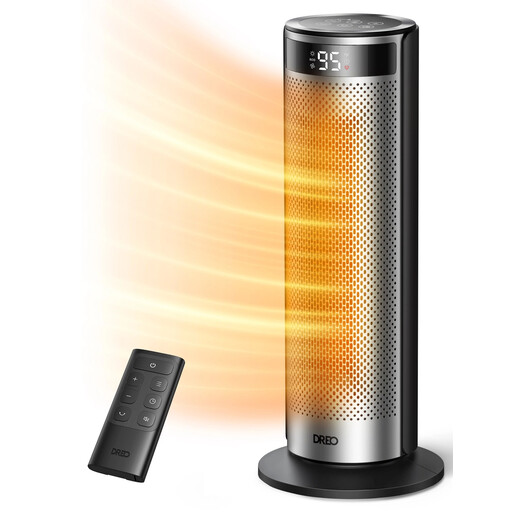
Why We Chose It The DREO Solaris 628 is a tower model engineered for performance in medium to large spaces. With 2000W of power and a large PTC heating element (250x44 mm), this model delivers rapid and widespread heat distribution. According to the manufacturer, the unit heats up within 2 seconds. The 70° oscillation feature ensures that heat is distributed evenly throughout the room.
Pros
- High Power Output: With 2000W, it's suitable for rooms from 15 to 25 m².
- Quiet Operation: The noise level ranges from 25 to 42 dB, which is relatively quiet for a model with this power.
- Comprehensive Safety Features: Equipped with tip-over protection, overheat protection, a flame-retardant housing, and a child lock.
- Precise Thermostat: Adjustable from 5 to 35°C in 1°C increments for accurate temperature control.
- User-Friendly: Includes a remote control and a 12-hour timer.
Who Is It For? This model is an excellent choice for anyone looking to heat a living room, open-plan office, or large hobby room quickly and effectively, without compromising on safety or quiet operation.
Check out the DREO Solaris 628
DREO Atom 416: Compact and Quiet Supplemental Heat
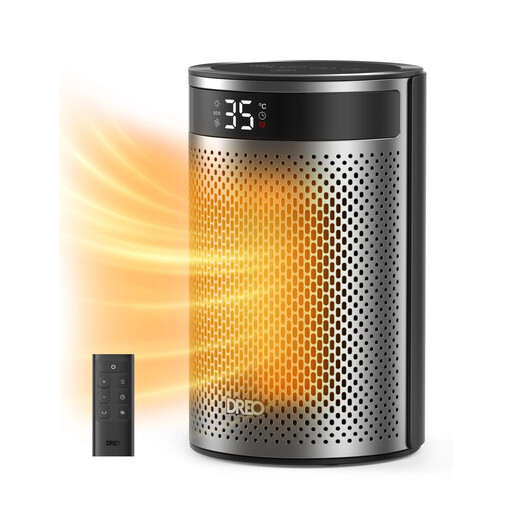
Why We Chose It The DREO Atom 416 focuses on efficiency and silence in a compact design. With a maximum power of 1500W, it is designed for smaller spaces. Its most notable feature is the low noise level; the manufacturer claims a minimum of 34 dB, which is comparable to a whisper. This makes it an excellent candidate for use in bedrooms or during focused work.
Pros
- Ultra-Quiet: With a noise level starting at 34 dB, this is one of the quietest options on the market.
- Compact and Lightweight: Weighing just 1.44 kg and featuring a small footprint, it's easy to move and store.
- Rapid Heating: This model also claims a 2-second heat-up time thanks to its PTC technology.
- Energy-Saving Modes: Features multiple power settings (900W/1300W/1500W) and an ECO mode with a thermostat.
- Full Safety Suite: Equipped with the same 8-layer safety protection as the larger model, including tip-over and overheat protection.
Who Is It For? Ideal for remote workers, students, or anyone seeking a quiet and safe supplemental heater for a bedroom, study, or small seating area (10-20 m²).
Didn't Find What You Were Looking For?
Choosing an electric heater is a personal decision that depends on your specific needs. If these models don't perfectly match your requirements, or if you're looking for other types of heating or energy-saving home appliances, we invite you to explore further.
Explore our full range of energy-efficient home appliances.
Frequently Asked Questions About Ceramic Heaters
1. Is a ceramic heater truly energy-efficient? Yes, compared to older electric heaters with heating coils, a PTC heater is more efficient. The ceramic element consumes less power to maintain the same temperature. However, the greatest energy savings are achieved by using a model with a precise thermostat. This ensures you only use heat when it's needed.
2. What is the difference between a PTC heater and a standard fan heater? The main difference is the heating element. A standard fan heater often uses a metal coil that glows red-hot. A PTC heater uses a ceramic stone that distributes heat more evenly and at a lower surface temperature. This generally makes PTC heaters more durable and safer, as the risk of fire from dust or contact is lower.
3. Can I leave an electric heater on overnight? Modern ceramic heaters with comprehensive safety features, such as tip-over protection and overheat sensors, are designed with safety in mind. However, it is always recommended to follow the manufacturer's instructions carefully. Use the timer function to automatically turn off the heater after a set period for added peace of mind. Also, ensure the heater has clear space around it and is never covered.
Written by the Joybuy Product Recommendation Officer