
Navigating Probiotics: Your 2026 Buyer's Guide
The world of probiotics can be overwhelming. Dozens of bottles promise to support your gut, immunity, or overall wellness. But how do you know which product is right for your needs? One capsule might contain billions of bacteria, another a specific strain, and yet another could be fortified with vitamins. Making the wrong choice is a waste of money and won't deliver the desired results.
This guide will help you make an informed choice based on facts and product features. We'll explain the key terminology and highlight several specific products, empowering you to decide what's most relevant for you.
Buyer's Guide: What to Look for When Buying Probiotics
Before choosing a product, it's helpful to understand the terminology. The world of gut bacteria extends beyond just probiotics.
Probiotics, Prebiotics, Synbiotics, and Postbiotics: What's the Difference?
- Probiotics: These are live microorganisms, or ‘good’ bacteria. When taken in sufficient amounts, they can have a positive effect on your health. They are best known for supporting the gut flora.
- Prebiotics: These are not bacteria, but specific fibres that serve as food for the good bacteria in your gut. Examples include inulin and Fructo-oligosaccharides (FOS).
- Synbiotics: A product containing both prebiotics and probiotics. The prebiotics act as food for the probiotics within the same supplement, which can increase their survival rate and effectiveness.
- Postbiotics: These are the by-products of probiotic bacteria, such as enzymes, peptides, and organic acids. They are essentially the substances produced by live bacteria. Postbiotics are non-living, which makes them more stable.
Selection Criteria for a Suitable Supplement
When comparing probiotics, the following parameters are important:
- CFU (Colony-Forming Units) Count: This number, often expressed in billions, indicates how many live bacteria are in a dose at the time of manufacturing. A higher number isn't necessarily better; effectiveness also depends on the strains used.
- Bacterial Strains: Not all bacteria are the same. Different strains (like Lactobacillus rhamnosus or Bifidobacterium lactis) have different properties and applications. Some products target general gut health, while others contain specific strains for the vaginal flora (probiotics for women) or the communication between the gut and brain (the gut-brain axis).
- Survival Technology: Probiotics must survive the acidic environment of the stomach to arrive alive in the intestines. Manufacturers use techniques like acid-resistant capsules or micro-encapsulation to achieve this.
- Additional Ingredients: Many supplements contain added vitamins, minerals, or plant extracts to enhance their effects. For example, Vitamin C is often added to support the immune system.
Our Recommendations for Probiotics in 2026
Based on the criteria above, we have selected products with clear specifications and applications.
Lucovitaal Brain & Gut support Bioticomel 30 capsules
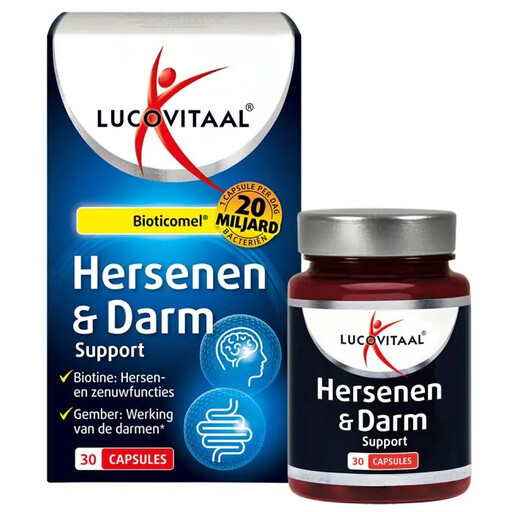
Why this product This supplement combines a high-potency dose of 20 billion live bacteria from the Bioticomel formula with specific ingredients for both gut and brain function. The product directly targets the gut-brain axis.
Benefits
- Contains vitamin B8 (biotin), which, according to the manufacturer, contributes to brain and nerve functions involved in reasoning ability.
- Enriched with Zingiber officinale (ginger), which supports digestion and contributes to normal bowel function.
- The formula contains 9 different bacterial strains, including various Bifidobacterium and Lactobacillus species.
Who is this for This product is ideal for individuals looking to support not only their digestion but also their cognitive functions, such as concentration and reasoning.
Lucovitaal Bioticomel intimate woman 30 capsules

Why this product This formula is specifically designed as a probiotic for women. It contains 20 billion bacteria per dose, distributed across 6 strains, including Lactobacillus rhamnosus and Lactobacillus reuteri. The addition of sea buckthorn, vitamin A, and C makes it a targeted product for intimate comfort and the mucous membranes.
Benefits
- Contains sea buckthorn, which, according to the product information, helps with vaginal dryness.
- Vitamin A is added for its benefits to the mucous membranes.
- Vitamin C supports the immune system and contributes to caring for the skin from within.
Who is this for This supplement is designed for women seeking support for the health of their mucous membranes and intimate area, in addition to general immune system support.
Lucovitaal 3-in-1 Bioticomel Pre · Pro · Post Biotics 30 capsules
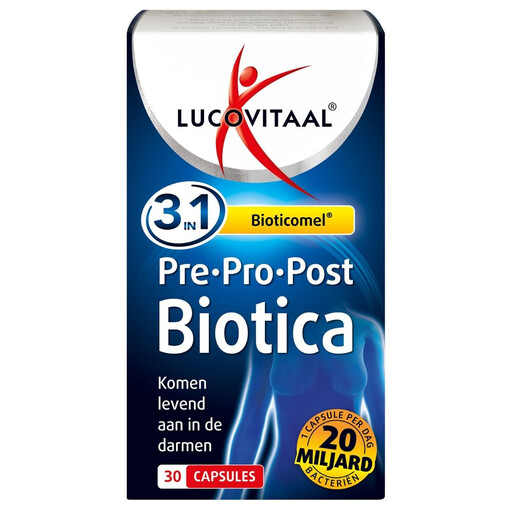
Why this product This is a synbiotic and postbiotic combination product. It not only delivers 20 billion live bacteria (probiotics) but also provides nourishment for these bacteria in the form of inulin and FOS (prebiotics). Additionally, it contains 2 billion postbiotics (inactivated bacteria).
Benefits
- A complete 3-in-1 formula that takes a multi-faceted approach to gut flora.
- The probiotics are protected by a special micro-encapsulation technology, which, according to the manufacturer, ensures the bacteria survive the stomach and arrive alive in the intestines.
- Contains vitamin C to support the immune system and a healthy resistance.
Who is this for This product is an excellent choice for anyone looking for a broad, all-in-one approach to restore gut flora and support the immune system.
Alternative Ways to Support Your Gut Flora
Besides using supplements, you can also support your gut flora through your diet. Fermented foods like yoghurt, kefir, sauerkraut, and kimchi naturally contain live bacteria. Making your own fermented products is also an option. A traditional base for fermentation processes is molasses, a syrup-like by-product of sugarcane or sugar beets that is rich in minerals. For those interested in exploring natural food sources, our selection of molasses can be a great starting point.
Frequently Asked Questions about Probiotics
1. What is the difference between prebiotics and probiotics? Probiotics are the live ‘good’ bacteria themselves. Prebiotics are indigestible dietary fibres that serve as food for these good bacteria, helping them grow and thrive in your gut.
2. How long does it take for probiotics to work? This varies from person to person and product to product. Some people notice a difference in their digestion within a few days, while for others it may take several weeks before the effects are noticeable. Consistent daily use is generally recommended for optimal results.
3. Can I take probiotics every day? Yes, probiotic supplements are generally designed for daily use. It's a way to continuously replenish your gut flora. Always follow the recommended dosage on the product packaging.