
Buying a Stand Mixer in 2026: A Practical Guide
A stand mixer is a valuable addition to any kitchen. It's an appliance that assists with kneading dough, whipping batter, and mixing ingredients. But with so many options available, the specifications can be overwhelming. How can you be sure you're choosing a model that fits your needs without overpaying for features you won't use? It's easy to make the wrong choice: a machine that's too weak for bread dough or too bulky for your countertop.
This guide will help you make an informed decision. We focus on the facts—power, capacity, and functionality—so you can find an appliance that truly meets your requirements.
What to Look for When Buying a Stand Mixer
Before you start comparing models, it's helpful to assess your own needs. The following criteria will guide you.
Mixer Type: Stand Mixer or Hand Mixer?
The first choice is between a stand mixer (sometimes called a kitchen robot) and a hand mixer.
- Stand Mixer / Mixer with Bowl: This is the classic
kitchen machinewith a fixed base, a motor in the head, and a mixing bowl. It's ideal for heavy-duty and frequent use, such as kneading bread or pizza dough. The machine does the work for you, leaving your hands free. - Hand Mixer: A compact and portable appliance that you hold. It's suitable for lighter tasks like whipping cream, mixing cake batter, or puréeing soups. A hand mixer is easier to store and generally more affordable.
Power (Watts)
The power, expressed in watts, indicates the strength of the motor. For a stand mixer for bread dough, a higher wattage is recommended.
- 300-500 Watts: Sufficient for hand mixers and light tasks, such as mixing liquid batters.
- 1000 Watts or more: Recommended for a
dough kneaderthat will regularly process heavy doughs. A powerful motor can handle the task without overheating.
Bowl Capacity (Litres)
The size of the mixing bowl determines how much you can prepare at once.
- 4-5 Litres: A common size for the average home cook. Suitable for baking a cake or a loaf of bread.
- 5.5 Litres or more: Useful for larger families or if you enjoy baking in large quantities (batch baking).
Included Accessories
A stand mixer typically comes with a whisk, a dough hook, and a flat beater (also known as a paddle attachment). Some models offer extras like a blender attachment, a meat grinder, or a pasta maker, which increases the appliance's versatility.
Our Top Stand Mixer Picks for 2026
Based on the criteria above, we have selected a range of models that represent different needs and use cases.
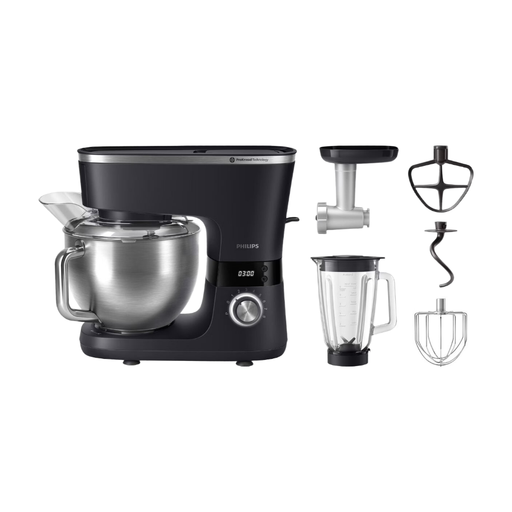
Philips Series 7000 Kitchen Machine HR7962/21
-
Why We Chose It: This Philips model combines a powerful motor with smart technology. According to the manufacturer, its ProKnead technology mimics the motion of manual kneading for a smooth dough. The integration with the HomeID app offers step-by-step recipe guidance, taking the guesswork out of the process. The included blender and meat grinder make it a multifunctional
kitchen robot. -
Advantages:
- Power: 1000 W motor, suitable for heavy dough.
- Bowl Capacity: Spacious 5.5 L stainless steel bowl.
- Functionality: LED timer with automatic shut-off, 8 speed settings, and bowl illumination.
- Accessories: Includes a 1.5 L glass blender and a meat grinder.
-
Who It's For: The home cook looking for a versatile and technologically advanced appliance. The app guidance makes it accessible for beginners, while the powerful motor and extra accessories will also appeal to the experienced user.
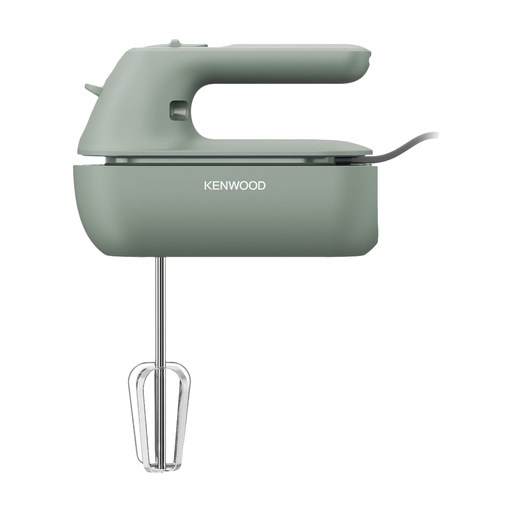
Kenwood HMP40.000GR Quickmix GO Hand Mixer
-
Why We Chose It: The Kenwood QuickMix Go is a prime example of a practical
hand mixer. Its design focuses on compactness and ease of use. The all-in-one storage system, which holds the beaters, dough hooks, and cord, is a clever solution for kitchens with limited storage space. -
Advantages:
- Power: 350 W, more than sufficient for most mixing and whipping tasks.
- Speeds: 5 speed levels for controlled mixing.
- Design: Compact and lightweight (1.03 kg).
- Storage: Integrated storage system for all accessories.
-
Who It's For: Ideal for those who bake occasionally, work in a smaller kitchen, or need a supplementary appliance to a larger stand mixer. It's perfect for quickly mixing batter, sauces, or whipping egg whites.
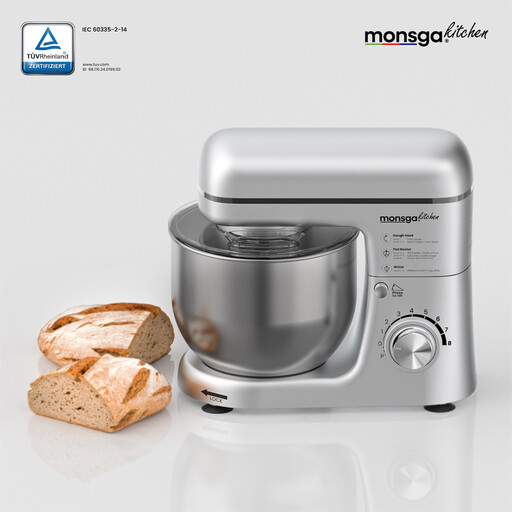
Monsga SM100 Stand Mixer
-
Why We Chose It: The Monsga SM100 focuses on pure power and capacity. With a 1000W motor and a very spacious 6.0-litre bowl, this appliance is built for large batches and heavy-duty tasks. A standout feature is its relatively low noise level (≤ 75 dB), which is a plus during extended use.
-
Advantages:
- Power: Powerful 1000 W motor.
- Bowl Capacity: Extra-large 6.0 L stainless steel bowl.
- Ease of Use: Tilt-head design for easy access to the bowl and 8 speed settings.
- Stability: Anti-slip suction cups keep the machine stable on the countertop.
-
Who It's For: The serious home baker who regularly makes large batches of dough. If you often bake bread or cook for a large family, the combination of a powerful motor and a large bowl offers significant advantages.
Looking for Specific Accessories?
The functionality of a stand mixer is often defined by its available attachments. A standard set with a dough hook and whisk is a great start, but you might be looking for more. Consider a pasta roller, an ice cream maker, a food processor attachment, or simply an extra mixing bowl. If you want to expand your current machine's capabilities or are searching for a specific part, it's worth exploring the options.
Explore our full range of mixer accessories here.
Frequently Asked Questions About Stand Mixers
1. What is the difference between a stand mixer and a food processor? A stand mixer is primarily designed for mixing, whipping, and kneading, especially for baking. Its attachments (whisk, dough hook) are tailored for these tasks. A food processor is designed for chopping, slicing, grating, and puréeing ingredients, using blades and discs as its main tools. While some stand mixers offer a food processor attachment, their core functions are different.
2. How many watts does a good stand mixer need for bread dough? For regularly kneading dense bread dough, a motor with at least 1000 watts of power is recommended. A powerful motor can handle the resistance of the dough without becoming overloaded, resulting in better-kneaded dough and a longer lifespan for the appliance.
3. Are all stand mixer parts dishwasher-safe? This varies by model and brand. The stainless steel mixing bowl and most standard attachments (whisks, hooks) are often dishwasher-safe. However, always check the manufacturer's manual. The main motor unit should never come into contact with water. Parts with special coatings, such as the non-stick coating on the Monsga's dough hook, may require specific cleaning instructions.
By: Joybuy Product Recommendation Officer Positioning: An objective, practical shopping guide focused on facts and product parameters, without marketing hype.