
Choosing the Right Ice Cream Maker in 2026: A Practical Guide
Making your own ice cream is a tempting prospect: you have complete control over the ingredients, can experiment endlessly with flavours, and avoid unnecessary additives. But the search for the right ice cream maker can be overwhelming. A poor choice often results in an unused appliance gathering dust in a kitchen cabinet. This is because models vary widely, from preparation time to the final texture of the ice cream.
This guide will help you understand the key specifications, so you can make an informed decision that suits your needs and your kitchen.
Buyer's Guide: What to Look For
Before buying an ice cream maker, it's important to understand the different types and how they work. The choice mainly depends on how spontaneously you want to make ice cream and how much space you have.
Type 1: Compressor Ice Cream Maker (Self-Freezing)
A compressor ice cream maker has a built-in freezing mechanism. You don't need to place any parts in the freezer beforehand.
- How it works: The appliance cools the bowl itself while the mixture is being churned. You simply pour in the ingredients, and the machine does the rest.
- Advantages: Ready to use out of the box, allowing you to make multiple batches of ice cream back-to-back. Ideal for spontaneous cravings or when preparing ice cream for a larger group.
- Disadvantages: Generally larger, heavier, and more expensive than models without a compressor.
Type 2: Freezer Bowl Ice Cream Maker
This type of ice cream maker requires preparation. The machine comes with a removable bowl that has a special cooling liquid in its walls.
- How it works: You place the empty bowl in the freezer for 8 to 24 hours. Once frozen, you place the bowl in the machine, add the ingredients, and start the churning process.
- Advantages: Compact, lighter, and typically more affordable to purchase.
- Disadvantages: Requires planning. You can only make one batch of ice cream at a time, after which the bowl must be refrozen.
Type 3: Alternative Ice Cream Makers (like the Ninja Creami)
This is a relatively new category. Instead of slowly freezing and churning a liquid base, these machines work with a base that is already completely frozen.
- How it works: You freeze your ingredients (e.g., fruit, milk, protein powder) in a special container 24 hours in advance. The machine then processes this frozen block with a rapidly spinning blade into a smooth, scoopable consistency.
- Advantages: Highly versatile for making ice cream, sorbet, milkshakes, and healthier alternatives. The texture is often uniquely smooth and creamy.
- Disadvantages: Also requires 24 hours of prep time to freeze the base.
Other Key Specifications
- Capacity: How much ice cream can you make at once? This is usually expressed in litres (e.g., 0.95 L, 1.5 L). Note the difference between the bowl capacity and the maximum yield, which is often lower because the mixture expands during freezing.
- Cleaning: Are the removable parts (bowl, paddle, lid) dishwasher-safe? This significantly increases convenience.
- Dimensions and Weight: Check if you have enough storage and counter space, especially for the heavier compressor models.
Our Top Picks for 2026
Below is a selection of ice cream makers with different features, based on their specifications and functionalities.
Ninja NC701BU Creami SPIN Ice Cream Maker
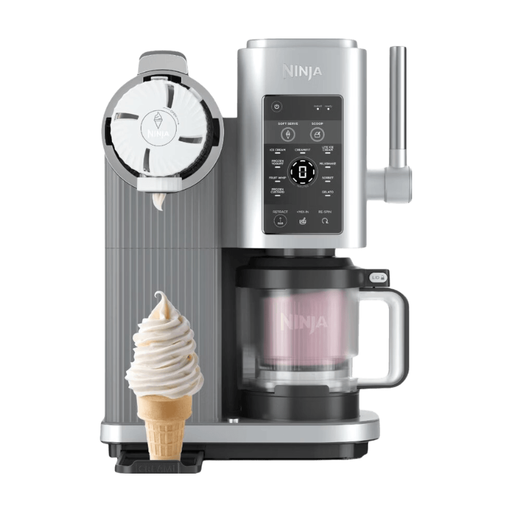
Why We Chose It The Ninja Creami SPIN is more than a traditional ice cream maker. The appliance transforms frozen ingredients into a variety of creations, from ice cream and sorbet to an at-home soft-serve experience. With 13 automatic programmes, it offers a high degree of versatility. The machine is designed for users who love to experiment and want control over their ingredients, including making healthier options.
Pros
- 13 programmes: Includes 6 classic functions, 6 soft-serve functions, and a mix-in programme.
- Soft-serve dispenser: A unique feature for making soft-serve ice cream at home with a rotating handle.
- CreamiFit mode: A specific programme for creating treats with more protein and fewer calories, according to Ninja.
- Dishwasher-safe parts: The tubs, lids, and blade are easy to clean.
Who is it for? For the creative home chef, families, and health-conscious users looking for a versatile appliance that does more than just make traditional ice cream. The need to freeze the base 24 hours in advance requires some planning.
Rommelsbacher IM 12 Ice Cream Maker
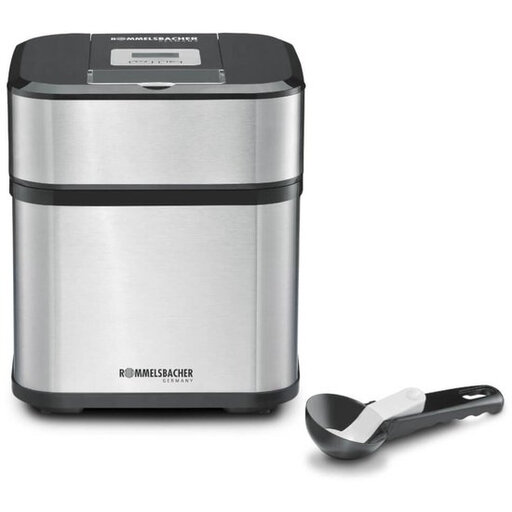
Why We Chose It The Rommelsbacher IM 12 is a classic freezer bowl ice cream maker. It's a no-frills appliance that focuses on one task: making ice cream, sorbet, or frozen yoghurt. The stainless steel housing gives it a durable look and feel, and operation is straightforward with a timer and an LCD screen.
Pros
- Compact and simple: Takes up little space and is easy to use.
- Timer with alert: A 40-minute timer indicates when the ice cream is ready.
- Removable freezer bowl: The bowl, with a capacity of 1.5 litres (for up to 500 ml of ice cream mixture), can be easily cleaned after use.
- Fully disassemblable: All parts can be taken apart for thorough cleaning.
Who is it for? For beginners or those who want to make homemade ice cream occasionally without investing in a large, expensive appliance. It's a great choice if you don't mind the planning (pre-freezing the bowl) and value simplicity and a compact design.
Cuisinart ICE90E One Pot Prep Compressor Ice Cream Maker
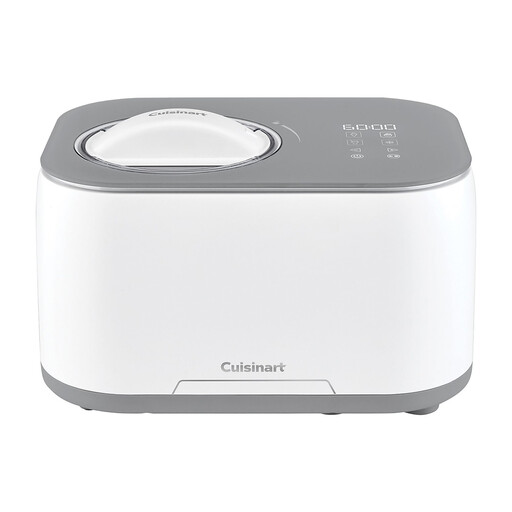
Why We Chose It The Cuisinart ICE90E is a self-freezing compressor ice cream maker. This means you don't need to pre-freeze any parts and can get started right away. Your ice cream, sorbet, or frozen yoghurt is ready in about 40 minutes. The 1-hour keep-cool function ensures your ice cream stays cold if you don't serve it immediately.
Pros
- Built-in compressor: No pre-freezing required, always ready to use.
- Fast results: Ice cream is ready in approximately 40 minutes.
- Keep-cool function: Keeps the ice cream at the right temperature for up to 1 hour after preparation.
- Compact for a compressor model: The design is relatively compact, making it a good fit for many kitchens.
Who is it for? For the ice cream enthusiast who values convenience and spontaneity. If you don't want to plan ahead and want the ability to make ice cream on a whim, a compressor model like this Cuisinart is an excellent option. The 0.95-litre capacity is suitable for small to medium-sized households.
Looking for a self-freezing model?
Convinced by the convenience of a self-freezing model and want to compare more options? Explore our full range and find the compressor ice cream maker that fits your needs.
Frequently Asked Questions (FAQ)
1. What is the main difference between an ice cream maker with and without a compressor? The main difference is the preparation. An ice cream maker with a compressor cools itself and is ready to use immediately. A model without a compressor has a removable bowl that you must freeze for at least 8-24 hours in advance. Compressor models offer more spontaneity, while freezer bowl models are more compact and often more affordable.
2. Can I also make sorbet in an ice cream maker? Yes, virtually all ice cream makers are also suitable for use as a sorbet maker. The process is identical: you create a base of fruit purée, sugar, and water, for example, and the machine churns and chills it into a smooth sorbet. Frozen yoghurt can be prepared in the same way.
3. How long does it take to make homemade ice cream? This depends on the type of machine. With a compressor model, the churning and freezing process itself usually takes between 20 and 40 minutes. For a freezer bowl model, the preparation time is similar, but you must factor in the 8 to 24 hours needed to freeze the bowl. For machines like the Ninja Creami, you also need to freeze the base for 24 hours, after which the processing itself takes only a few minutes.
Written by the Joybuy Product Recommendation Officer.