
Apple USB-C Charging Cable 2m: A Buyer’s Guide to Choosing Well
A broken or too-short charging cable is a common inconvenience. When you're looking for a replacement, especially a 2m Apple USB-C charging cable, you're flooded with options. The market is saturated with cables that promise fast charging but fail to deliver, or that break at the connector after just a few months. This not only leads to frustration but can also pose risks to your expensive Apple devices.
Before you make a choice, it's wise to understand the most common pitfalls:
- The "Fast Charging" Myth: Many cables claim to support fast charging but lack the correct Power Delivery (PD) protocol or the required wattage. The result? Your MacBook charges at a crawl, or your iPhone 15 can't utilise its fast-charging feature.
- Poor Durability: A cable that looks a year old after just three months of use is a poor investment. The weak point is almost always the joint between the cable and the plug, where the plastic quickly wears down and breaks.
- Hidden Safety Risks: An uncertified cable can damage the battery or charging port of your iPad Pro or MacBook due to inconsistent power delivery. The savings on the cable don't outweigh the potential repair costs.
What to Look For: The Specifications That Matter
You don't need to read a technical manual to make a smart purchase. Pay attention to the following three points, and you'll choose a cable that suits your devices and your needs.
Power (Wattage) and Power Delivery (PD)
This is the most critical specification for charging speed. A cable must be able to transfer power from the adapter to your device.
- iPhone 15 / iPad: A cable that supports at least 20-30W is necessary for fast charging.
- MacBook Air / Pro: For these devices, you need a cable that can handle 60W, 100W, or more. A MacBook fast charger cable must explicitly state this power rating.
- Future-Proof: An Apple 240W charging cable is the new standard, ensuring you can charge future, more powerful devices at maximum speed. Look for the USB-C Power Delivery cable specification to ensure compatibility.
Material and Build Quality
A cable's lifespan depends on its material. A standard plastic (PVC) cable is functional, but a braided USB-C cable made of nylon offers significantly more resistance to kinks, pulls, and daily wear and tear. The reinforcement at the connectors is crucial.
Data Transfer
All USB-C cables can transfer data, but the speed varies. Most charging cables, including Apple's standard one, use USB 2.0 speeds (480 Mbps). This is fine for syncing photos and music. If you regularly transfer large video files, a cable with USB 3.2 (5 Gbps or higher) is a better consideration. However, for most users, this is not a priority.
Top Picks for Every User
Not everyone needs the same cable. Below are some choices tailored to specific user profiles.
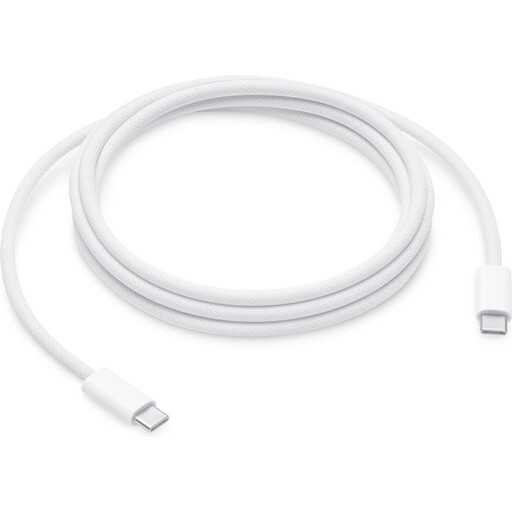
Apple 240W USB-C Charging Cable (2 m) White
Why This Fits Their Persona: For those who value seamless integration and reliability within the Apple ecosystem. This official cable is designed for perfect compatibility with an iPhone 15, iPad Pro, or MacBook.
As an official 2-meter Apple charging cable, this product guarantees the promised charging performance and safety. The braided design addresses the durability problem.
Supports up to 240W Power Delivery, making the cable future-proof for all Apple devices. The woven finish is noticeably more durable than older models.
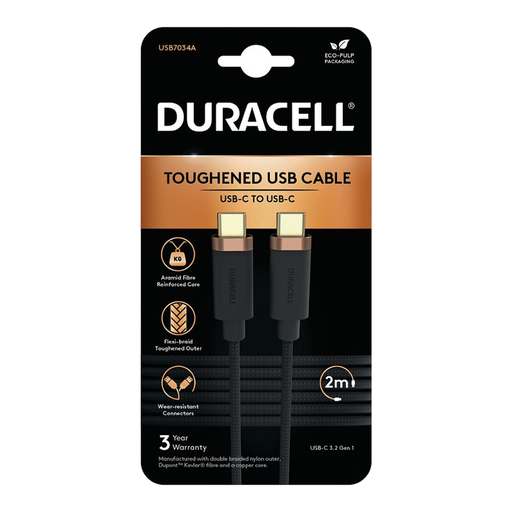
DURACELL CABLE USB-C/USB-C BRAIDED 2M
Why This Fits Their Persona: Ideal for those who are always on the go, frequently coiling and uncoiling their cable, or simply want a product that can withstand rough handling. This cable is built for longevity.
Directly tackles the pitfall of poor durability. According to the manufacturer, the cable is reinforced with Dupont Kevlar and double-braided nylon, specifically designed to resist breaking.
Extremely robust construction. Supports 65W charging and a higher data transfer speed of 5 Gbps, which is an advantage when transferring large files.
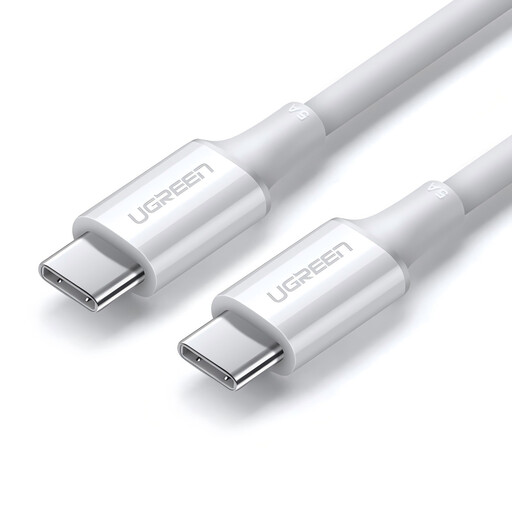
UGREEN USB 2.0 Type C M-M 5A Cable 2m
Why This Fits Their Persona: A reliable and affordable USB-C to USB-C cable for daily use. Perfect as a second cable for the office or a travel bag, without paying a premium price.
UGREEN is a well-known brand that provides clear specifications. The cable supports PD 3.0 and up to 100W, making the "fast charging" claim verifiable and reliable.
Excellent value for money. Support for 100W charging makes it suitable for virtually all USB-C devices, including most MacBooks.
Looking for more options?
We have compiled a complete, up-to-date list of products that fully meet these strict selection criteria and relevant safety standards.
Frequently Asked Questions
Can I use any USB-C cable for my iPhone 15 or MacBook?
No, not just any cable. While the connector fits, the supported wattage is crucial. A cable designed for a phone (e.g., 20W) will charge a MacBook (which requires 60W or more) very slowly or not at all. Always choose a cable that supports the wattage of your most powerful device.
What is the difference between a 60W, 100W, and 240W USB-C cable?
The number indicates the maximum power the cable can safely deliver.
- 60W: Sufficient for most phones, tablets, and lighter laptops like the MacBook Air.
- 100W: The standard for more powerful laptops like the MacBook Pro.
- 240W: The latest standard (EPR - Extended Power Range) designed for the most demanding laptops and future devices. A 240W cable is fully backward-compatible with devices that require less power.
How do I know if a charging cable truly supports fast charging?
Check the product specifications for the term Power Delivery (PD) and the maximum wattage. A reputable manufacturer will clearly state this information. Vague claims like "fast charge" without these specifics are often a red flag. For Apple devices, an official or MFi-certified (for Lightning) cable is always a safe bet, and for USB-C, a cable from a reputable brand with clear PD specifications is recommended.