
Buying a 98-Inch 144Hz TV: A Guide to Avoiding Common Pitfalls
A television screen nearly 2.5 metres wide in your living room. The very idea is enough to excite any film and gaming enthusiast. But before you invest in such a home cinema TV, it's crucial to know what to look for. An impressive size doesn't automatically guarantee a great viewing experience. Many buyers fall into common traps that turn their expensive purchase into a disappointment.
Here are the two most common mistakes when choosing an extra-large television:
- Blinded by Size: Buyers focus so much on the 98-inch dimension that they overlook image quality. A gigantic screen with blurry motion, washed-out colours, or poor black levels delivers a subpar experience, especially during fast-paced action scenes or games.
- Ignoring Future-Proof Connections: A premium TV is a long-term investment. Models without enough HDMI 2.1 ports can't fully leverage the latest generation of game consoles or high-end soundbars, meaning you'll quickly run into limitations.
This guide will help you bypass these pitfalls and explain which specifications truly matter for a large gaming TV or cinematic experience.
What to Look For: The Non-Negotiable Specifications
The spec sheet for a modern TV can be overwhelming. To cut through the marketing jargon, these are the three key features to focus on for a 98-inch 144Hz TV.
1. Refresh Rate: Why 144Hz is a Game-Changer
The refresh rate, measured in Hertz (Hz), indicates how many times the image is updated per second. Standard TVs have a 50 or 60Hz rate. For a screen of this size, a higher refresh rate is essential to prevent motion blur.
A 144Hz panel, often combined with Variable Refresh Rate (VRR), is crucial for serious gamers. It ensures extremely smooth and responsive gameplay without screen tearing (broken images). Even if you're not a gamer, you'll benefit when watching fast-paced sports, where the ball and players remain sharp and clear.
2. Panel Technology: The Power of a 98-inch 4K QLED TV
A 98-inch 4K QLED TV uses Quantum Dots—minuscule particles—to produce a wider and more accurate colour palette than standard LED TVs. This results in more vibrant and realistic images. Combined with 4K resolution (3840x2160 pixels), this delivers a razor-sharp picture, even on a 249 cm television.
Also, look for support for HDR formats like Dolby Vision and HDR10+. These technologies optimise brightness and contrast on a scene-by-scene basis, ensuring details are clearly visible in both the darkest and brightest parts of the image.
3. Connectivity and Smart Features: HDMI 2.1 and a Fast OS
A TV with HDMI 2.1 is indispensable for a future-proof purchase. These ports support the full bandwidth required for 4K gaming at 120Hz or 144Hz and offer features like:
- Auto Low Latency Mode (ALLM): The TV automatically switches to game mode for minimal input lag.
- eARC (Enhanced Audio Return Channel): Allows you to send high-quality audio formats like Dolby Atmos to your soundbar or receiver through a single cable.
Furthermore, the operating system is important. A smart TV with Google TV offers a fast, intuitive interface and access to a vast library of apps. This prevents the frustration of a slow and clunky user experience.
Recommended Products to Consider
Not all large TVs are created equal. We've highlighted several models that suit different user profiles, based on objective specifications.
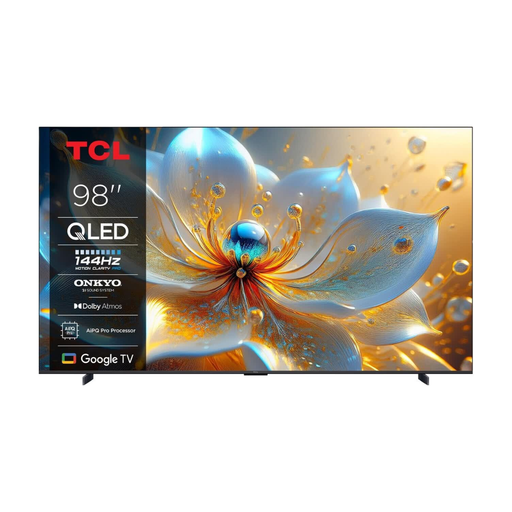
TCL 98T8C 98inch 4K Ultra HD 144Hz 249CM TV
Why This Fits Their Persona: For those who demand the absolute best in size, speed, and image quality. This TV is designed for an immersive experience, whether you're playing the latest games or hosting a movie night in your own home cinema.
This model combines its massive 98-inch size with a native 144Hz QLED panel and multiple HDMI 2.1 ports. You get both scale and performance, without compromise.
The combination of 144Hz VRR and the TCL Game Master Pro feature set offers a supremely smooth and responsive gaming experience. The Google TV platform is fast and user-friendly.
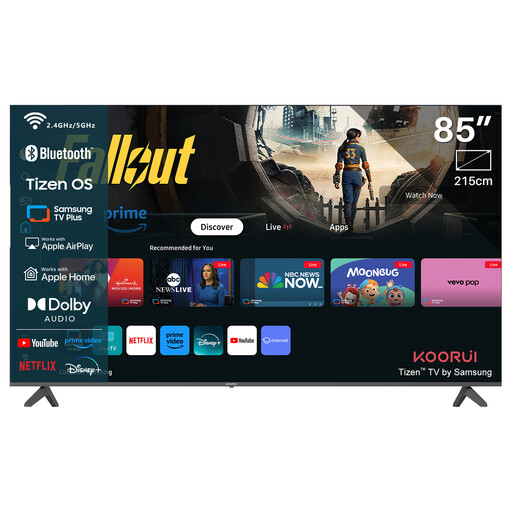
KOORUI K85D3UQ-T8, 85inch , 4K QLED, TIZEN TV
Why This Fits Their Persona: Ideal for those who want a massive viewing experience and value great picture quality, but don't necessarily need absolute top-tier 144Hz gaming features. An excellent choice for movie nights.
This model focuses on a solid foundation: a very large 85-inch 4K QLED panel for vibrant colours and a modern, fast TIZEN smart platform. You get a premium viewing experience without paying for niche, high-end gaming features.
Offers an impressively large size with the superior colour reproduction of QLED. The borderless design provides a modern aesthetic that fits well in many interiors.
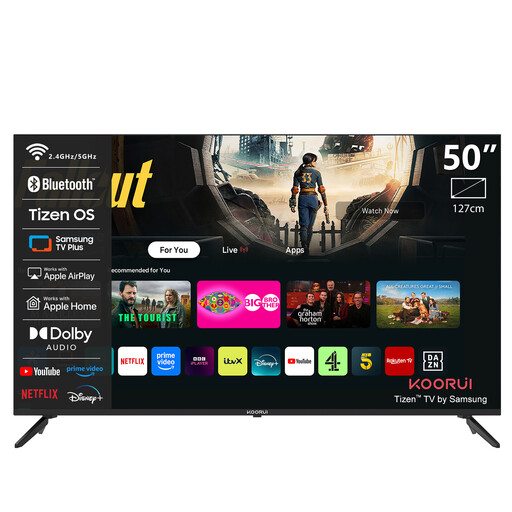
KOORUI K50Q1UQ-T8, 50inch , 4K QLED, TIZEN TV
Why This Fits Their Persona: For those who want the image quality of QLED and the sharpness of 4K, but simply don't have the space for an 85 or 98-inch screen. A smart choice for a standard living room or bedroom.
This model prioritises image quality over sheer size. A 50-inch 4K QLED TV is a much better investment than a larger TV with an inferior panel and outdated technology.
Delivers the benefits of 4K QLED technology and a modern TIZEN smart system in a more compact and often more accessibly priced format. The borderless design ensures a premium look.
Looking for More Options?
We have compiled a complete, real-time list of products that fully satisfy these strict selection criteria and UK safety regulations.
Is a 98-inch TV too big for my living room?
This depends on your viewing distance. A general guideline for a 4K TV is a viewing distance of 1 to 1.5 times the screen diagonal. For a 98-inch (249 cm) TV, this translates to a distance of about 2.5 to 3.7 metres. Measure your room to determine if you can watch comfortably without constantly having to move your head.
What is the point of 144Hz if films and TV shows don't use it?
It's true that most films and TV series are shot at 24 or 30 frames per second (fps). The main advantage of 144Hz lies in gaming, where modern consoles and PCs can output frames at a higher rate. Additionally, the TV can use the higher refresh rate for motion interpolation, which can result in smoother visuals when watching sports.
What is the power consumption of such a large TV?
A larger screen logically consumes more power. Large TVs often fall into a lower energy efficiency class, such as F or G, especially when displaying HDR content. The exact specifications, like the consumption in kWh per 1000 hours, are listed on the product's energy label. For example, the TCL 98T8C has specified consumption for both SDR and HDR modes, which you can find on the product page.